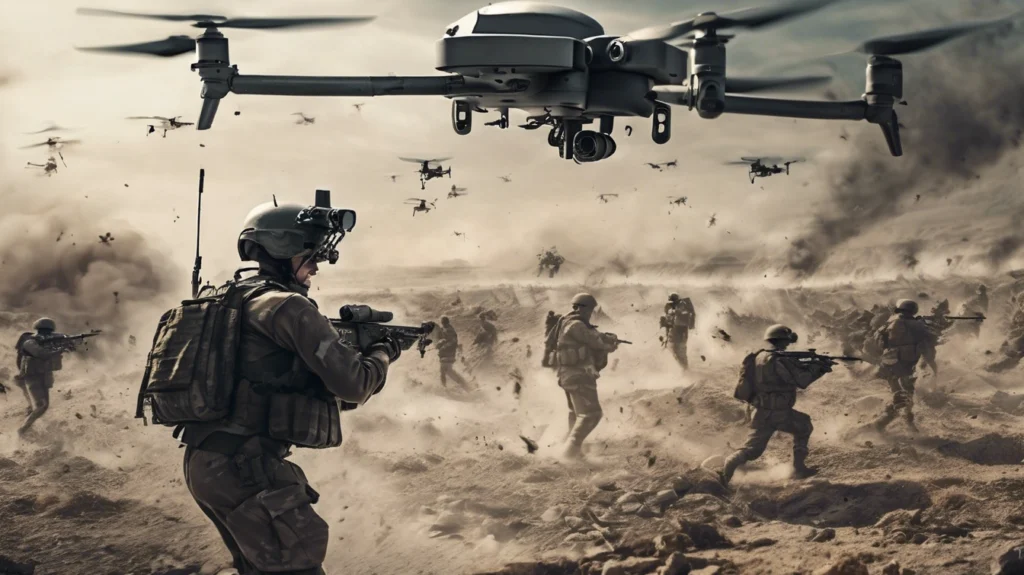
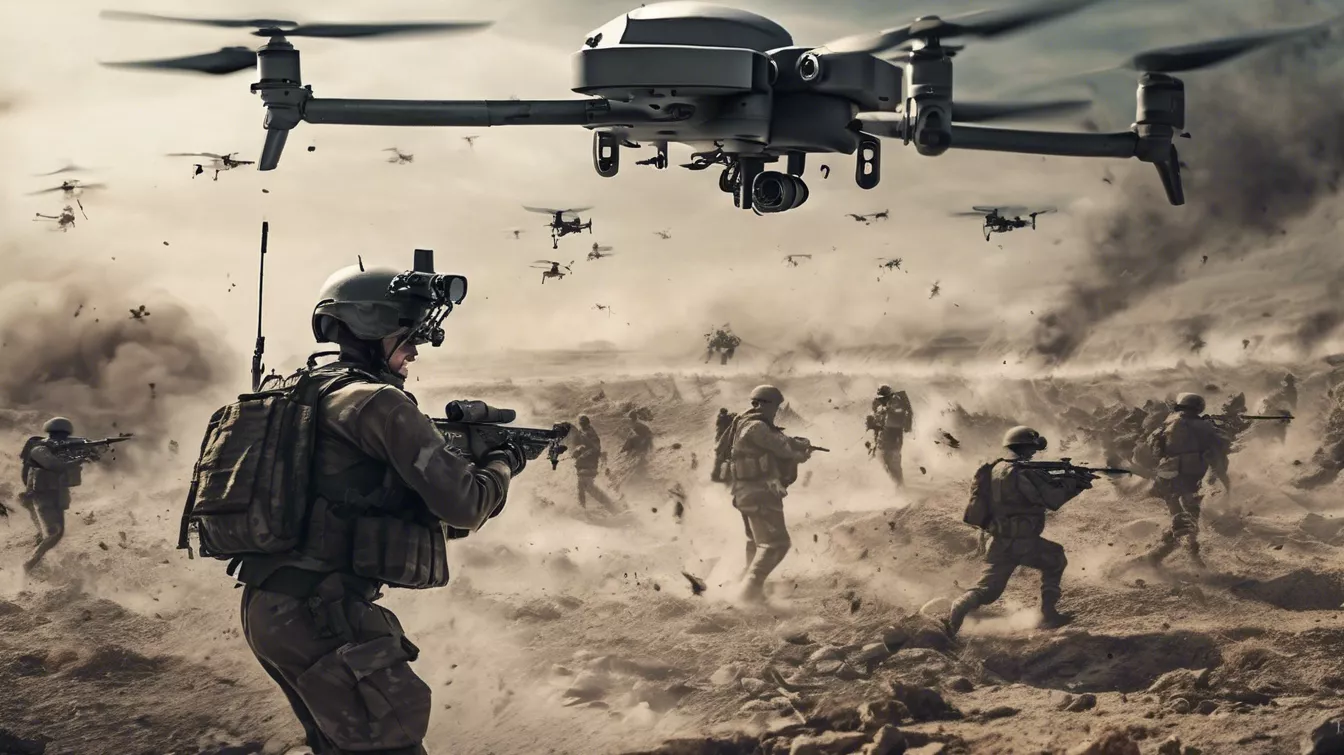
When I first dove into General Valerii Zaluzhnyi’s thoughts on the Russia-Ukraine conflict, shared during his April 2025 speech at a Ukrainian-British arms forum and fleshed out in places like Defense One How drones, data, and AI transformed our military, I felt a whirlwind of awe and worry. His words, born from the raw reality of a war that’s been grinding on since 2014 and exploded in 2022, hit me hard. Zaluzhnyi isn’t just talking about battlefield tactics; he’s unpacking how drones, artificial intelligence (AI), and data are flipping the script on what war means. As someone who loves digging into big ideas, his insights shook me up, making me think hard about how technology is reshaping conflict and what that means for all of us.
Grappling with a New Kind of War
Zaluzhnyi’s word “ступор” — stalemate — stopped me in my tracks. It’s not just a military term; it feels like a gut punch, capturing a war where technology has locked both sides in place. He paints a picture of a battlefield so exposed by drones and surveillance that nobody can move without risking everything. This “zone of death,” stretching 10-15 kilometers, got me thinking about how it’s like scrolling through social media, where every move is watched. It’s eerie to imagine soldiers living with that kind of constant threat, and it made me wonder how we’re all navigating a world where privacy feels like a relic.

His six big takeaways from the war hit me like a series of lightbulb moments. He says old-school weapons are history, tanks are sitting ducks against cheap drones, GPS-guided missiles are losing their edge because of electronic warfare, air defenses can’t keep up with swarms of tiny drones, planes are now just backup players, and naval drones have pushed warships into hiding. Each point flipped my view of what makes an army strong. Tanks, those roaring giants I’ve seen in war movies, reduced to targets for a $500 drone? That’s wild. Zaluzhnyi’s push for a total rethink of how wars are fought felt urgent, but I couldn’t help asking: can the world’s militaries, stuck in their old ways, really keep up?
Drones: The New Kings of the Battlefield
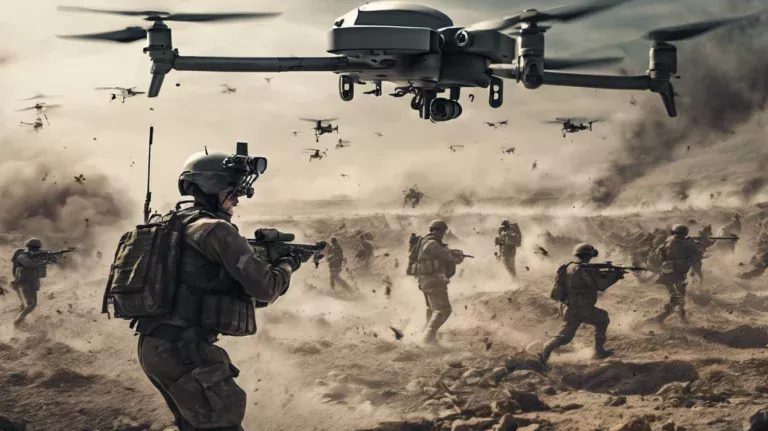
When I dug into the numbers, I was floored by how much drones are running the show. A New York Times piece says they’re behind about 70% of casualties in this war, sometimes even 80% in certain fights, leaving tanks and artillery in the dust Drones Now Rule the Battlefield. Ukraine churned out over 1 million First-Person View (FPV) drones in 2024, and Russia claims it’s making 4,000 a day, with both aiming for 3-4 million in 2025. It’s hard to wrap my head around a war where machines are doing most of the fighting. I kept picturing soldiers, hearts pounding, knowing a drone could zero in on them alone. It’s like living in a horror movie where the monster never sleeps.
Zaluzhnyi says drones are causing two-thirds of Russian losses, making them twice as deadly as other Ukrainian weapons How drones, data, and AI transformed our military. Ukraine’s “robots first” approach, led by Colonel Vadym Sukharevsky, is all about saving lives by sending machines in first. They’ve pulled off some incredible feats, like using sea drones to mess with Russia’s Black Sea fleet, even sinking the Moskva in April 2022, or hitting Russian targets 700 miles away Drones Now Rule the Battlefield. I’m amazed by Ukraine’s grit and creativity, but it also scares me a bit. With their drone industry booming from seven companies before the war to 500 now, what happens if this tech spreads to the wrong hands? Could groups outside governments start waging their own drone wars?
Russia’s trying to keep up, using motorcycles to dodge drones, but it’s not going great. Ukrainian intel spotted Russia’s 299th Airborne Division riding in small groups, but the noise gave them away, and 15 of 18 motorcycles got taken out in one attack south of Bahatyr X post. It’s like a high-tech game of tag, but with life-or-death stakes. It makes me sad to think how every clever move just gets countered, keeping this war stuck in neutral, just like Zaluzhnyi says.
AI: The Brain Behind the Battle and the Stories
Zaluzhnyi’s talk about Ukraine’s DELTA system blew my mind. It’s like a super-smart assistant, pulling together info from people, satellites, drones, social media, and cyber sources to give commanders a clear picture of the battlefield How drones, data, and AI transformed our military. They call it a “Google for military,” and it’s helping Ukraine outsmart a bigger enemy. I use AI to sort through research, but this is next-level, making split-second calls in a war zone. It’s simpler than fancy Western systems like Palantir, which makes me admire Ukraine’s knack for doing more with less. Still, I worry—what if the tech fails or gets hacked in the chaos of battle?
Then there’s AI’s role in shaping what we think, which hit me right in my social media-scrolling heart. I’m used to dodging clickbait and fake news, but Russia’s AI game is on another level. A 2023 study found 20.28% of pro-Russian posts on X came from bots, reaching 14.4 million people Russian propaganda on social media. Since March 2022, fake videos of Zelenskyy or Putin, made with AI, have popped up on X and YouTube, trying to stir up confusion Information Warfare in Russia’s War. It’s creepy to think TikTok can push you toward lies in just 40 minutes. Even I, someone who double-checks everything, could get tripped up by that.
Ukraine’s fighting back with tools like War of Words, which sifts through tons of Russian media to spot propaganda. But with X seeing over 500,000 posts a minute, it’s like trying to empty an ocean with a bucket Information Warfare in Russia’s War. Platforms like Facebook, with tools catching 99.5% of terrorist content, and X, which zapped 75,000 fake Russian accounts, are trying hard, but it’s tough Information Warfare in Russia’s War. I keep thinking about how fast AI spreads lies compared to how slow we are at catching them. It’s a battle for our minds, and it’s scary to think we might be losing.
The Stalemate: Heartbreak and Hard Truths
Zaluzhnyi’s “zone of death” gave me chills. I imagined soldiers creeping through a 10-15 km stretch where one wrong move could bring a drone down on them. It’s like World War I trenches, but with high-tech terror instead of mud. This stalemate, or “ступор,” means neither side can push forward without losing too much. Ukraine’s 2023 Zaporizhzhia counteroffensive, which got bogged down by Russian defenses, shows just how stuck things are Russian Offensive Campaign Assessment, April 26, 2025. My heart aches for the soldiers and families caught in this mess, where technology has turned courage into a gamble.
Who’s coming out ahead in this deadlock? Zaluzhnyi thinks Ukraine’s holding its own, using Western tech and a thriving drone scene to keep Russia at bay. They’ve hit over 20 Russian oil refineries by April 2025 and even flew a drone over Moscow’s Kremlin dome in 2023, shaking things up. But I can’t stop worrying about the bigger picture. Russia’s building up near Finland, bringing back the Leningrad Military District, and now North Korean troops are in the mix, confirmed in April 2025. They’re even bragging about a military pact with another nuclear power Russian Offensive Campaign Assessment, April 26, 2025. It feels like we’re inching toward something much scarier, and I wonder if the world’s ready.
Dreaming of What’s Next
Zaluzhnyi’s push to rethink war got me imagining what’s coming. He says old air defenses and planes are fading, and I can almost see a future where drones and AI run everything. Talk of solar-powered “mothership” drones or AI-guided ones dodging jammers sounds like something out of a movie, but Ukraine’s already printing drone parts on 3D printers and tweaking everyday tech for war. It’s incredible, but it’s also heavy. A drone assassination in Bryansk in April 2025, taking out a Russian tech expert, showed me how precise—and terrifying—these tools can be Source. How do we keep AI weapons from going too far?
The fight over what we believe is just as intense. Russia’s using AI to mess with elections, like in the U.S. in 2024, showing how far their reach goes Russia’s AI Interference. Ukraine’s War of Words, crunching 700 terabytes to fight lies, is inspiring, but I’m not sure it can keep up with AI’s speed. This war’s been called the “first AI war” because it’s all over social media, and it makes me question if we can still tell what’s real Russia-Ukraine War Through Social Media. It’s a lot to carry, knowing our trust is on the line.
Wrapping It Up
General Zaluzhnyi’s words are like a wake-up call, shouting that war’s changed forever because of drones and AI. I’m blown away by Ukraine’s ability to innovate while fighting for survival—it’s honestly incredible. But the stalemate, the battle for truth, and the chance of a bigger fight keep me up at night. Zaluzhnyi’s pushing us to rethink not just how we fight but what it means when tech calls the shots. As I sit here writing, I’m hoping his message lights a fire under the world’s leaders to adapt fast, so we can use these lessons to build a future where tech brings us together, not tears us apart.