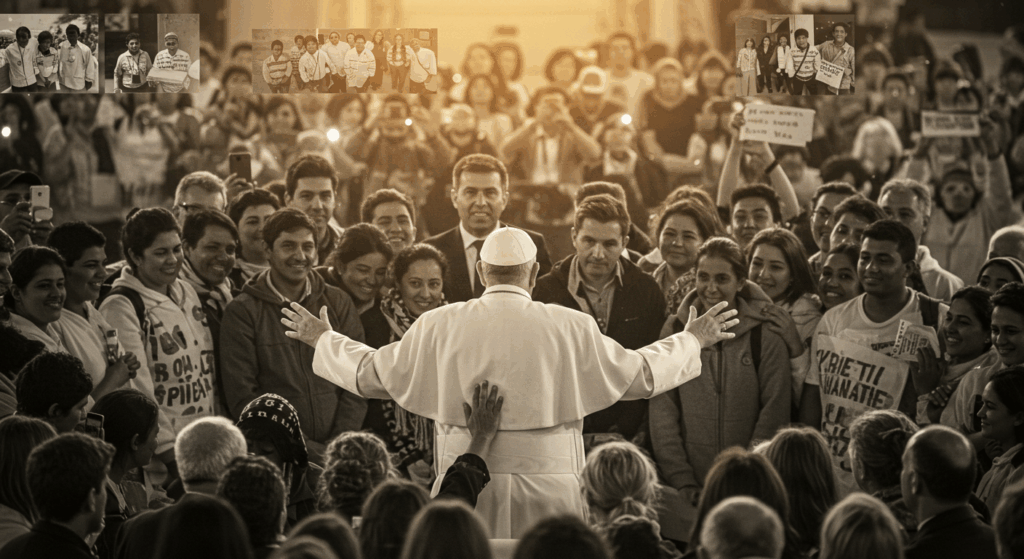
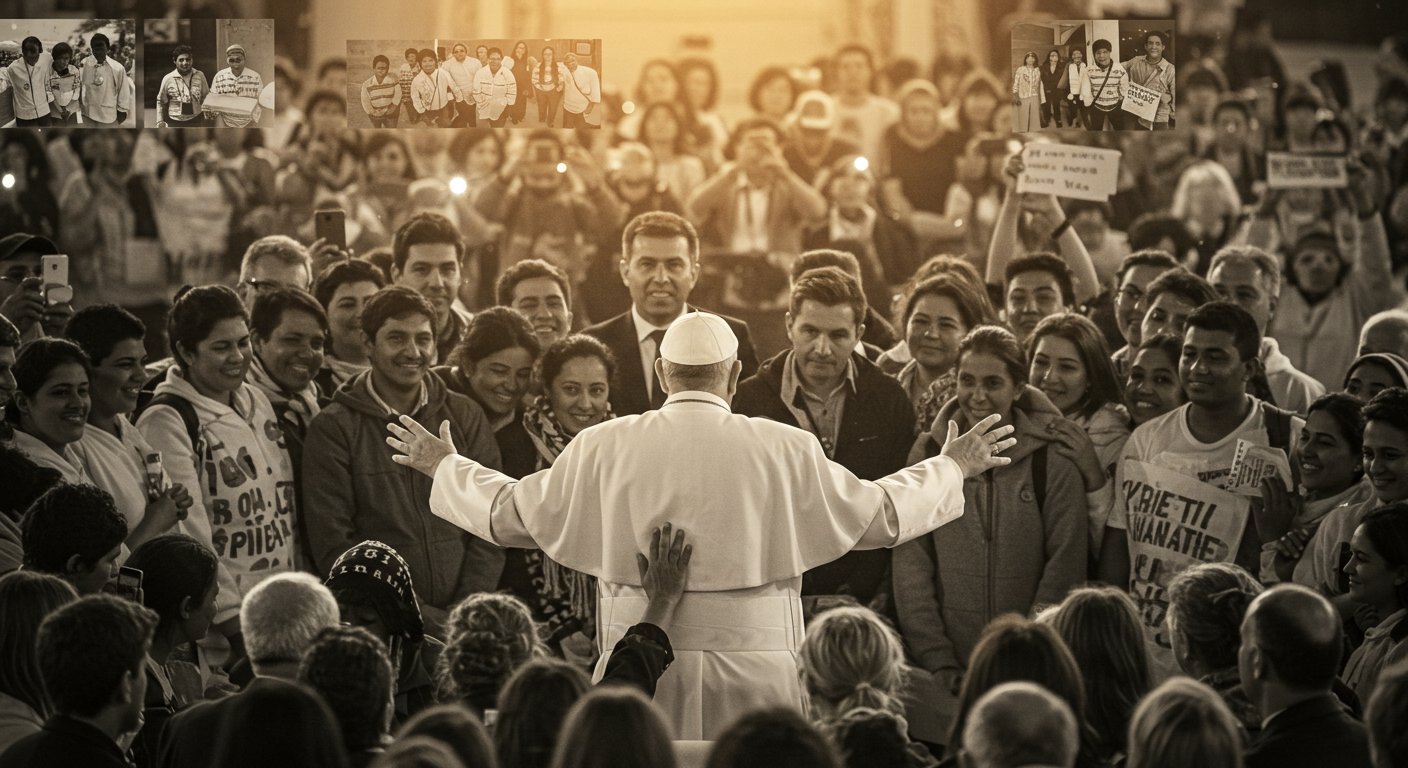
On April 21, 2025, the world mourned the passing of Pope Francis, who died at 88 from a stroke and heart failure. Born Jorge Mario Bergoglio in 1936 in Buenos Aires, Argentina, he was the first Latin American and Jesuit pope, leading the Catholic Church from 2013 with a focus on humility, compassion, and social justice. His papacy redefined the Church’s global presence, leaving a legacy that balances progressive reform with enduring challenges.
Early Life and Path to the Papacy
Bergoglio, the son of Italian immigrants, lived a varied early life. He worked as a bar bouncer and janitor, studied chemistry, and survived a severe lung infection before entering Jesuit training in 1958. Ordained in 1969, he became Archbishop of Buenos Aires in 1998 and a cardinal in 2001. His election as pope in 2013, taking the name Francis after St. Francis of Assisi, signaled a shift toward the Global South, where nearly half of the world’s 1.4 billion Catholics reside.

A Papacy of Humility and Social Justice
Pope Francis earned the title “the people’s pope” through acts of humility, like paying his own hotel bills and living in a modest Vatican guesthouse. His teachings emphasized the poor, critiquing unchecked capitalism with remarks like, “How can it be that it is not a news item when an elderly homeless person dies of exposure, but it is news when the stock market loses two points?” His 2015 encyclical Laudato Si’ called the planet “our common home,” urging environmental stewardship and influencing global climate discussions.
He championed marginalized groups, appointing women to senior Vatican roles and apologizing to Indigenous peoples in Canada in 2022 for abuses at Catholic-run residential schools. His diplomacy bridged divides, as seen in facilitating a joint Ukrainian-Russian Easter service during Russia’s war with Ukraine and meeting Israeli and Palestinian families affected by conflict.
Reforming the Church Amid Controversy
Pope Francis tackled the Church’s clergy sexual abuse crisis, though with mixed results. In 2018, he apologized to survivors in Chile after initially defending a bishop accused of cover-ups. In 2019, he defrocked Cardinal Theodore McCarrick for abuse and issued Vos Estis Lux Mundi, a law to hold bishops accountable. While significant globally, enforcement remained inconsistent, and some critics felt reforms lagged behind U.S. standards.
His inclusive stances on LGBTQ+ issues stirred debate. In 2016, he said the Church should apologize to gay people for offending them, and in 2023, he permitted transgender baptisms under certain conditions. These moves, alongside his social justice focus, clashed with conservative factions, leading to tensions like the 2023 removal of Bishop Joseph Strickland, a vocal critic.
Challenges and Health Struggles
Later in his papacy, Francis faced health issues, including hospitalizations for respiratory problems and double pneumonia in early 2025. He hinted at resignation in 2022, saying, “It’s not a catastrophe; you can change the pope.” His death triggered the Novemdiales, a nine-day mourning period, culminating in a funeral on April 26, 2025, in St. Peter’s Square. Breaking tradition, he was buried at the Basilica of Santa Maria Maggiore in Rome, in a simple tomb inscribed “Franciscus.”
A Lasting Legacy
Pope Francis’s legacy lies in his evangelization rooted in compassion. His 2020 encyclical Fratelli Tutti emphasized human fraternity, addressing a “compassion deficit” exacerbated by social media’s impersonal nature. He shifted the Church’s focus to the Global South, where Catholicism grows fastest, particularly in Africa’s 330 million Catholics. However, challenges persist: U.S. Hispanic Catholic identification fell from 67% in 2010 to 43% in 2022, reflecting pluralism’s impact.
His papacy revealed divisions—progressive versus conservative, global versus Western—that will shape the upcoming conclave. Yet, his call to “proclaim Christ” through care for the poor and marginalized endures. As Father Alan Figueroa Deck noted, his election marked a “monumental change,” making the Church “open to all peoples.” For 1.4 billion Catholics, Pope Francis’s life remains a testament to living the gospel radically, a beacon for a Church navigating modernity.