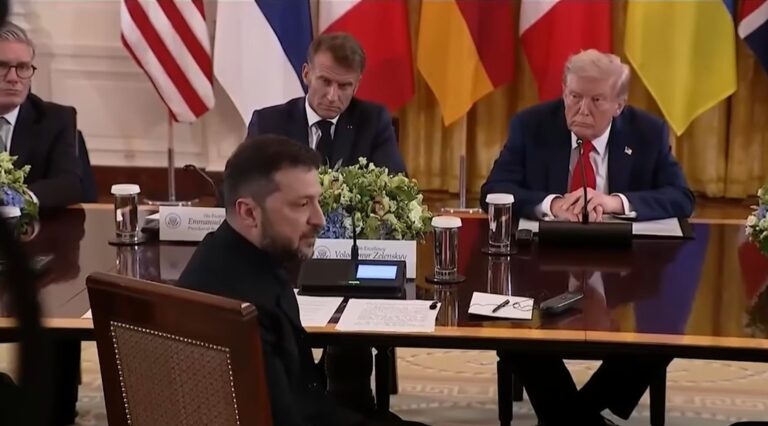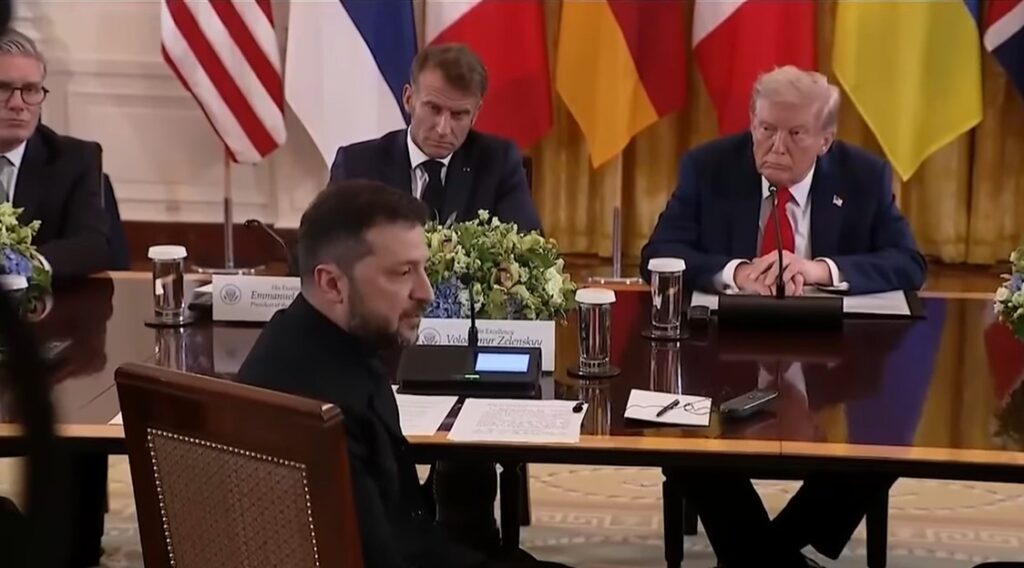
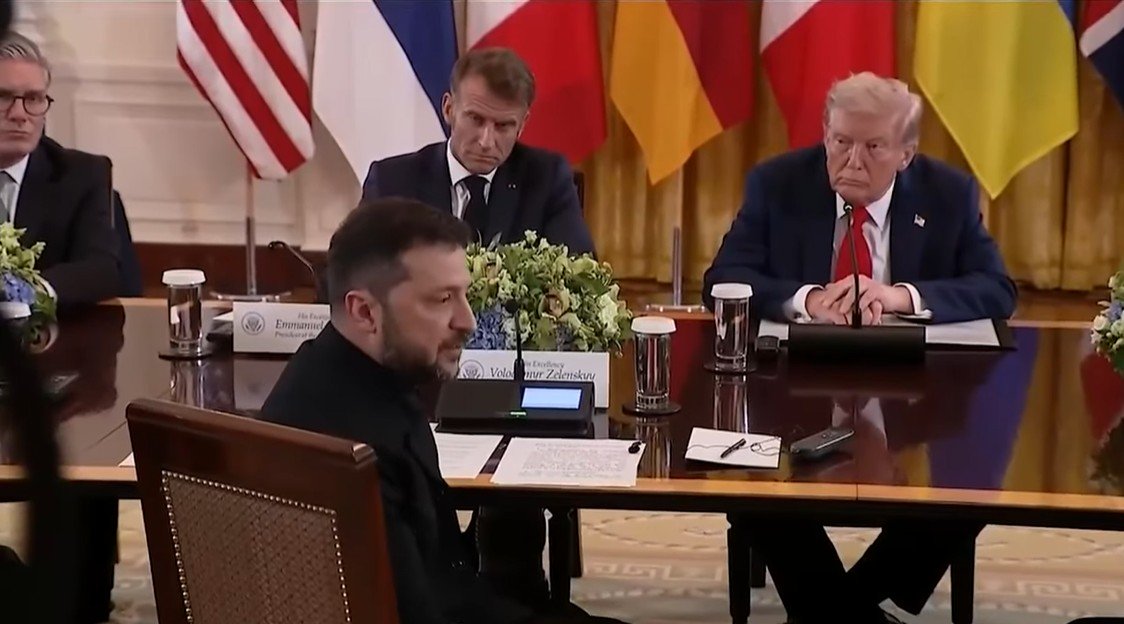
On August 18, 2025, I sat glued to the news, parsing every update and statement about the extraordinary gathering at the White House. Ukrainian President Volodymyr Zelenskyy, U.S. President Donald Trump, and a formidable delegation of European leaders—including French President Emmanuel Macron, German Chancellor Friedrich Merz, Italian Prime Minister Giorgia Meloni, Finnish President Alexander Stubb, European Commission President Ursula von der Leyen, NATO Secretary General Mark Rutte, and British Prime Minister Keir Starmer—convened to address the ongoing Russia-Ukraine war. The stakes couldn’t have been higher: finding a diplomatic resolution to Europe’s deadliest conflict in decades, securing Ukraine’s future, and navigating the complex interplay of global powers. As I sifted through reports, social media posts, and official statements, I was struck by the delicate balance of optimism, tension, and unresolved questions that defined this historic summit. Here’s my deep dive into what happened, what it means, and where it might lead.
A Historic Summit with a Unified Front
The White House meeting was a spectacle of diplomatic unity, a stark departure from the disastrous February 2025 encounter where Trump and Vice President JD Vance publicly berated Zelenskyy, accusing him of ingratitude for U.S. aid, before abruptly ending the session. This time, the mood was noticeably warmer. Trump greeted Zelenskyy outside the West Wing with a smile, complimenting his formal black suit—a shift from the olive-green attire Zelenskyy has worn since Russia’s 2022 invasion—and guiding him inside with a hand on his back. The presence of European heavyweights underscored a collective resolve to support Ukraine, signaling that it was no longer a peripheral player but a central figure in global security discussions.

Zelenskyy’s message was clear and resolute: “We need a reliable and lasting peace for Ukraine and the whole of Europe.” He emphasized that security guarantees, akin to NATO’s Article 5, were a prerequisite for ending the war, rejecting past assurances like the 1994 Budapest Memorandum, which failed to protect Ukraine from Russia’s aggression. The European leaders echoed this, with von der Leyen stressing the importance of respecting Ukraine’s territorial integrity and Macron warning that weakness toward Russia would sow the seeds for future conflicts. For me, this unity was a powerful counterpoint to fears that Trump, fresh off his Alaska summit with Russian President Vladimir Putin, might push Ukraine into a corner.
The Diplomatic Dance: Progress and Pitfalls
The summit unfolded in two parts: a bilateral meeting between Trump and Zelenskyy in the Oval Office, followed by a multilateral session with European leaders in the East Room. Reports described the talks as “constructive” and “very good,” with Zelenskyy noting discussions on “sensitive matters” like security guarantees and prisoner exchanges. A key outcome was Trump’s commitment to U.S. involvement in these guarantees, a shift from his earlier stance that Europe should bear the primary burden. However, specifics remained elusive, with Trump vaguely promising “very good protection” without detailing what form it would take.
What caught my attention was Trump’s pivot away from demanding an immediate ceasefire, a position he had championed before his Alaska meeting with Putin. Instead, he pushed for a “permanent peace deal,” even suggesting negotiations could proceed amid ongoing fighting. This alarmed European leaders like Macron and Merz, who insisted that a ceasefire must precede substantive talks. Macron put it bluntly: “We cannot hold discussions under bombs.” Their insistence on a truce reflected a broader European concern that Trump’s approach, influenced by Putin, might prioritize speed over substance, potentially at Ukraine’s expense.
Trump’s behavior during the summit added another layer of complexity. Midway through the multilateral talks, he paused to call Putin, a move that raised eyebrows among observers. According to a source familiar with the closed-door discussions, Trump told Macron he believed Putin “wants to make a deal for me,” a comment captured on a hot mic that fueled speculation about his motives. The Kremlin’s readout of the call was less definitive, with aide Yuri Ushakov describing it as “frank and very constructive” but only committing to exploring higher-level Russian-Ukrainian talks. This ambiguity left me wondering whether Trump’s outreach was a genuine step toward peace or a risky improvisation that could embolden Moscow.
The Shadow of Territorial Concessions
One of the most contentious issues was Trump’s mention of “possible exchanges of territory” in Ukraine’s Donbas region, a nod to Russia’s demands for control over Donetsk and Luhansk. In a Truth Social post before the summit, Trump reiterated that Ukraine could “end the war almost immediately” by ceding Crimea—illegally annexed by Russia in 2014—and forgoing NATO membership. This stance, echoed in his Alaska talks with Putin, alarmed Ukraine and its allies. Zelenskyy was unequivocal in his rejection, citing Ukraine’s constitution, which prohibits territorial concessions, and pointing to the failure of past Russian land grabs to secure peace. “Ukrainians are fighting for their land, for their independence,” he said, a sentiment that resonated deeply with me as I considered the human cost of the war.
European leaders were equally firm. Merz, who described the summit as exceeding his expectations, stressed that “we must never confuse aggressor and victim in this terrible war.” Stubb drew on Finland’s 1944 experience, noting that sustainable peace often follows military setbacks for the aggressor, a subtle jab at Russia’s ongoing offensive. The European presence seemed designed to counterbalance Trump’s leanings, ensuring that any deal wouldn’t sacrifice Ukraine’s sovereignty. Posts on X reflected similar concerns, with one user warning that Trump’s summit with Putin offered Moscow legitimacy without concessions, potentially weakening the Western front.
Federalization: A Risky Proposition
The idea of federalization—granting greater autonomy to regions like Donbas while maintaining Ukraine’s unity—surfaced as a potential compromise. Russia has long pushed this concept, seeing it as a way to dilute Kyiv’s authority. As I analyzed the reports, I felt torn. Federalization could theoretically address regional grievances while preserving Ukraine’s borders, but it risks creating a Trojan horse for Russian influence, as seen in past agreements like the Minsk accords. Zelenskyy’s team rejected this outright, emphasizing that Ukraine’s armed forces and public resolve are its true guarantees of sovereignty. I couldn’t help but agree—any deal that empowers Russia’s proxies in occupied territories could unravel Ukraine’s hard-fought independence.
Security Guarantees and Economic Incentives
A major focus of the talks was security guarantees to deter future Russian aggression. Zelenskyy proposed a $90 billion arms deal with the U.S., funded partly by Europe, and a joint drone production initiative, signaling Ukraine’s intent to bolster its defenses regardless of peace talks. Trump’s vague commitment to “coordination” with Europe on these guarantees left room for skepticism, but European leaders like Starmer hailed the “real progress” made. Macron noted that the U.S. willingness to flesh out these plans was a significant step, though he stressed the need for concrete details within “the next week to 10 days.”
The economic angle intrigued me. Ukraine’s vast mineral resources and industrial capacity make it an attractive partner for Western investment, a point not lost on Trump, who has a history of framing diplomacy in transactional terms. However, Russia’s overnight strikes on Ukrainian cities like Kharkiv and Zaporizhzhia, killing at least 10 people, underscored the human toll and Moscow’s apparent intent to disrupt negotiations. Zelenskyy called these attacks “demonstrative and cynical,” a reminder that Putin’s strategy may be to weaken Ukraine’s resolve before any deal is reached.
Prospects for Peace: Timelines and Challenges
The summit’s most tangible outcome was Trump’s announcement that he was arranging a bilateral meeting between Zelenskyy and Putin, potentially within two weeks, followed by a trilateral summit including himself. German Chancellor Merz suggested a timeline as early as August 22, though Zelenskyy clarified that no date was set. The Kremlin’s noncommittal response—describing the idea as “worthwhile” but avoiding specifics—dampened hopes for an imminent breakthrough. Putin’s refusal to meet Zelenskyy directly thus far, coupled with Russia’s continued attacks, suggests that Moscow may be playing for time.
For me, the timeline hinges on Ukraine’s military strength and Western unity. Zelenskyy’s focus on arming Ukraine and securing guarantees reflects a strategy of negotiating from a position of strength, a lesson drawn from historical precedents like Finland’s 1944 ceasefire with the Soviet Union. European leaders’ insistence on a ceasefire as a prerequisite contrasts with Trump’s willingness to negotiate under fire, a divide that could complicate talks. Moreover, Trump’s call to Putin during the summit, while bold, risks signaling that he’s prioritizing Moscow’s buy-in over Kyiv’s trust.
Looking Ahead: Hope Tempered by Caution
As I reflect on the summit, I’m cautiously hopeful but acutely aware of the challenges. The unity displayed by Zelenskyy and European leaders, coupled with Trump’s shift toward supporting security guarantees, marks a step forward from the February fiasco. Yet, Trump’s flirtation with Putin’s demands—particularly on territorial concessions and NATO membership—raises red flags. His hot-mic comment about Putin wanting a deal “for me” suggests a personal stake that could cloud his judgment, potentially alienating allies who see Ukraine’s fight as a bulwark against Russian expansionism.
The next few weeks will be critical. A bilateral Zelenskyy-Putin meeting, if it materializes, could test Russia’s willingness to negotiate in good faith. European leaders’ insistence on Ukraine’s inclusion in all decisions—“no decision about Ukraine without Ukraine,” as Starmer put it—offers a safeguard against backroom deals. Meanwhile, Ukraine’s resilience, backed by its military and public, remains its greatest asset. As I continue to follow the news, I’m struck by the weight of this moment: a chance for peace, but only if the West holds firm against Russia’s aggression and Trump’s unpredictability. The world is watching, and so am I, hoping for a resolution that upholds Ukraine’s sovereignty and secures a lasting peace.