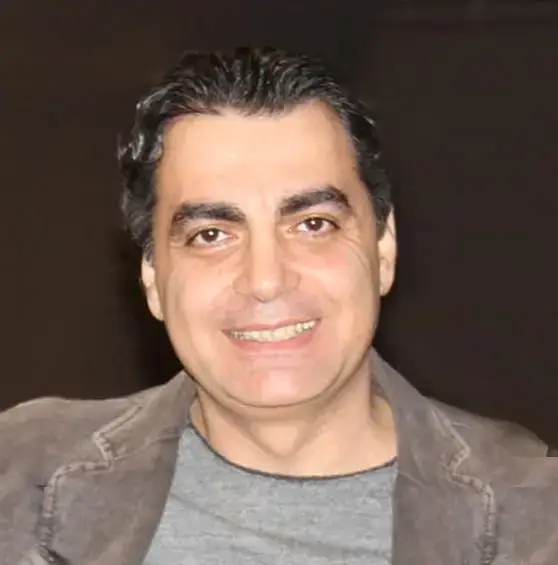
As a journalist, I’ve always been drawn to stories that lurk in the shadows – truths buried not because they’re hard to find, but because they’re too dangerous to uncover. When I stumbled across an interview with Andrei Zykov, a retired Russian investigator, detailing criminal case № 144128 – infamously dubbed the “Putin case” – I knew I had to dig deeper. This wasn’t just a story about financial misconduct; it was a window into the heart of Russia’s elite corruption in the 1990s, implicating none other than Vladimir Putin himself. As Irakli Gagua, a journalist forced to flee Abkhazia, Georgia, in the 1990s due to Russian-incited conflict, now living in Los Angeles and running StreamPress.com alongside high-tech ventures, I’m driven to expose systemic injustices. This case, with its chilling details, demanded my attention.
Why This Research Matters
My journey into case № 144128 began on the internet, where I scoured credible sources to verify Zykov’s claims. Platforms like Novaya Gazeta, which first publicized the case in 2000, and international reports from Spanish prosecutors provided critical corroboration. I turned to the web because it offers a wealth of archival material and firsthand accounts that illuminate Russia’s opaque political history. Having witnessed the devastation of Russian interference in Abkhazia, I feel a personal stake in understanding how power and corruption intertwine. This research, published on StreamPress.com, isn’t just about exposing past wrongs; it’s about warning societies like Georgia of the dangers of unchecked authority. By piecing together Zykov’s testimony with online records, I aim to shine a light on a system that thrives on impunity.

The Twentieth Trust: A Slush Fund for the Elite
Case № 144128 centered on the Twentieth Trust, a private corporation in St. Petersburg that operated as a financial octopus, its tentacles reaching deep into the city’s power structures. According to Zykov, a senior investigator in the 1990s, the corporation illegally siphoned 80% of state credit lines meant for St. Petersburg’s enterprises in 1994 alone – funds intended to pay salaries and support public institutions. This was no small feat: the Twentieth Trust, a 100% private entity, had no legal right to these credits, yet it amassed a staggering 4 billion rubles while state enterprises scraped by with the remaining 20%.
Reading Zykov’s account, I was struck by the audacity of it all. How could a private company hijack state resources so brazenly? The answer lay in a web of corruption, with the Twentieth Trust acting as what Zykov called Putin’s “obshchak” – a slush fund to enrich loyalists and silence regulators. Bribes in the form of apartments and villas were doled out to officials, from fire inspectors to customs agents, ensuring the corporation’s schemes went unchecked. As I cross-referenced these claims online, reports of similar practices in 1990s Russia – where privatization fueled elite enrichment – lent credibility to Zykov’s allegations.
A Network of Power and Complicity
The deeper I dug, the more names surfaced: Vladimir Putin, then a deputy in St. Petersburg’s administration; Alexei Kudrin, head of the city’s financial management; Vladimir Kozhin, overseer of currency-export controls; and Sergei Nikeshin, the Twentieth Trust’s director. Zykov’s evidence was damning: Putin’s signatures authorized illegal fund allocations, including 415 million rubles supposedly for restoring a monastery in Israel, which instead funded villas in Spain for Putin, Nikeshin, and others. Kudrin’s signatures littered documents approving non-targeted budget spending, while Kozhin turned a blind eye to illicit financial transfers, once issuing a mere “remark” instead of a 500-million-mark fine for a 100-million-mark violation.
Most shocking was the alleged link to organized crime. Spanish prosecutor Jose Grinda, whose 2017 findings I found in online archives, revealed intercepted calls where Putin was referred to as “the czar” in discussions about land purchases in Spain. Even more startling, Alexander Bastrykin, now head of Russia’s Investigative Committee, reportedly thanked Gennaidy Petrov, a Tambov crime syndicate leader, for his appointment. Having seen Russian influence destabilize Abkhazia, I know the cost of such networks. The idea that Russia’s elite collaborated openly with figures like Petrov left me reeling.
The Investigation’s Perilous Path
Zykov’s team faced insurmountable odds. The investigation began with a 1997 audit by Vasily Kabachinov, whose 52-page report exposed the Twentieth Trust’s violations. But progress was slow – two years of resistance preceded the case’s formal launch. As the team uncovered evidence, from worker testimonies about Spanish villas to financial records of offshore transfers, pressure mounted from Moscow. When Putin ascended to the FSB directorship, then the premiership, and finally the presidency in 2000, the investigation became a liability.
The human cost was stark. Kabachinov died in a suspicious fire in 1999, a fate Zykov and others believed was no accident. Online searches revealed similar cases of “convenient” deaths in Russia during that era, reinforcing my suspicion of foul play. The team’s leader, Fedor Portnov, was replaced by Evgeny Kadyrov, a Moscow-appointed investigator (no known relation to Chechnya’s Kadyrov family), who oversaw the case’s closure. When investigator Oleg Kalinichenko leaked details to Novaya Gazeta, the case gained public traction but sealed its fate. In August 2000, the General Prosecutor’s Office shut it down, retroactively dating the closure to shield Putin, now president.
Retaliation and Impunity
Zykov’s fate hit me hardest. After the case closed, he was dismissed, sent on forced leave, and charged with stealing case materials – a fabricated accusation meant to discredit him. The absurdity of the charge was clear when investigators found the “missing” documents in the case’s archives, expanded from 117 to 128 volumes through bureaucratic manipulation. Zykov’s resilience, speaking out despite the risks, reminded me of my own journey from Abkhazia to Los Angeles, where I’ve built a platform at StreamPress.com to amplify such voices. Online, I found echoes of his story in reports of whistleblowers silenced by Russia’s state machinery.
The case’s figures, meanwhile, thrived. Kudrin became Russia’s finance minister, Kozhin managed presidential affairs, and others like Igor Sechin and Nikolai Patrushev rose to prominence. The Twentieth Trust’s 28 billion ruble debt was quietly forgiven, a testament to the system’s tolerance for elite corruption. Reading about their success, I felt a mix of anger and helplessness – how could justice be so thoroughly subverted?
A Warning for Today
Case № 144128 isn’t just a relic of Russia’s chaotic 1990s; it’s a warning of what happens when power shields corruption. The internet, with its trove of investigative reports and leaks, allowed me to piece together this story, but it also underscored the limits of exposure without accountability. Russia’s institutions, then and now, seem designed to protect the powerful, a reality that resonates in Georgia, where I was born.
Today, Georgia faces its own battle against Russian influence, exacerbated by Russia’s ongoing aggression. Since February 2022, Russia’s full-scale invasion of Ukraine has raged for over three years, claiming countless lives and destabilizing the region. This war, coupled with Russia’s occupation of Abkhazia and South Ossetia, serves as a stark reminder of Moscow’s imperial ambitions. In 2024 and 2025, reports surfaced of Russian special services attempting to infiltrate the Georgian government, backing pro-Russian factions like the Georgian Dream party to undermine the country’s pro-Western trajectory. The controversial “foreign agents” law, pushed by Georgian Dream in 2024, sparked protests for mirroring Kremlin tactics to silence dissent. Online sources, including Radio Free Europe and Eurasianet, confirm fears of Russian operatives funding campaigns to sway Georgia’s elections, threatening its EU and NATO aspirations.
Through StreamPress.com, I’m compelled to tell these stories because silence breeds complicity. Zykov’s courage inspires me to keep digging, even when the truth is dangerous. I urge readers to demand transparency, to question leaders who hide behind impunity. In Russia, Ukraine, and Georgia, the truth is a scarce currency, but it’s one worth spending to reclaim justice. For me, this research is a step toward that goal – a reminder that no shadow is too deep to be pierced by light.