Imagine the moment. A collective sigh of relief sweeps across the globe as news breaks: the war in Ukraine has finally ended. Vladimir Putin appears on television, a victory speech delivered. Peace agreement signed. Whatever the terms, the immediate thought is likely, “Thank God, the worst seems behind us. Peace, in any form, is better than relentless fighting.”
But what if that relief is tragically short-lived?

Fast forward just a few weeks. Alarming reports begin to flood news feeds. Television channels buzz with urgent updates: Russian troops, under the pretext of “preventing provocations,” “protecting the Russian-speaking population,” and “ensuring the security of the Russian Federation,” have crossed into the territory of a NATO country. The most probable target? One of the three Baltic states. It’s conceivable that Russian and Belarusian forces would jointly seize the Suwałki Corridor – that narrow, strategic strip of land bordering Lithuania, the Kaliningrad region, Belarus, and Poland, effectively isolating the Baltic states by land from their NATO allies.
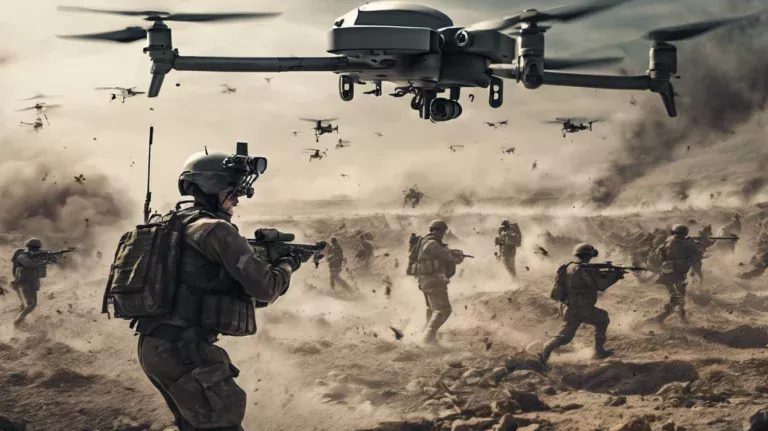
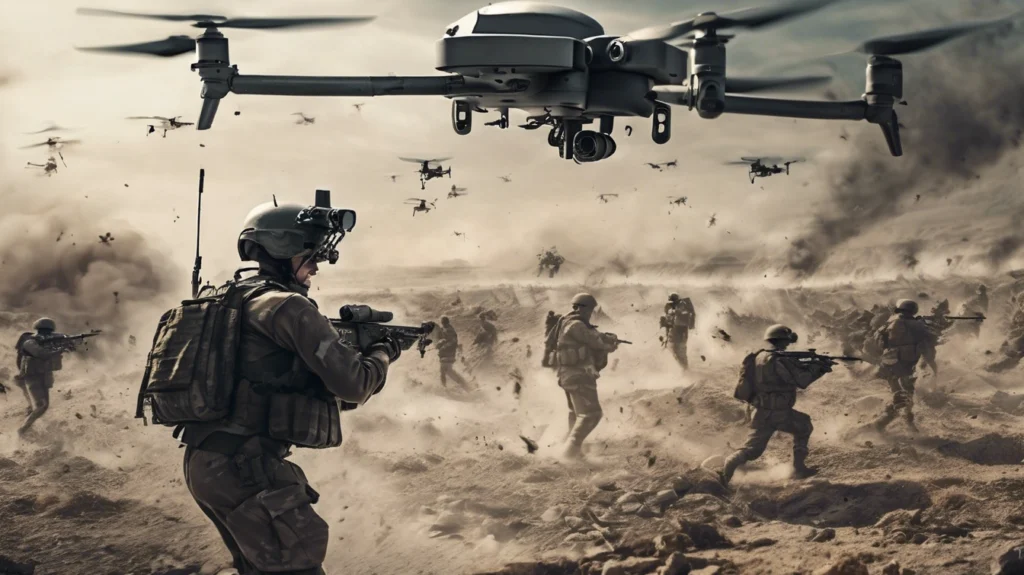
This wouldn’t be a full-scale invasion mobilizing hundreds of thousands. Instead, a swift operation, supported by armored vehicles and drones, would see Russian forces capture a piece of territory, which Moscow would then declare a vital strategic foothold necessary for its own defense. And then, the chilling ultimatum from Putin: Russia is ready and willing to use tactical nuclear weapons to protect this newly acquired area. Footage of Russian launchers deploying nuclear warheads would circle the globe.
What happens next? The Western world would, understandably, be gripped by panic. How far are the Russians truly willing to go? Is this a desperate bluff, or are they genuinely prepared to unleash nuclear devastation? The war in Ukraine has demonstrated that Russia lacks the conventional strength to seize vast European territories. But they possess missiles, and these missiles, while not always precise, do reach their targets. When a missile carries a nuclear warhead, pinpoint accuracy becomes a terrifyingly moot point.
NATO’s Moment of Truth – Or Its Demise?
NATO allies would convene urgent discussions, and an immediate, perhaps fatal, split would emerge. Poland, the Baltic states, the Czech Republic, Finland, and Sweden – nations on the front line – would likely demand a full-scale counterattack. However, countries geographically removed from the immediate conflict zone might lean towards compromise, proposing urgent negotiations with Putin, desperate to avert a third world war.
Should NATO even begin to assemble forces for a counteroffensive, Russia could escalate by launching non-nuclear missile strikes on European military targets. The shock of such attacks would sow genuine panic across European nations. This terror would only intensify when Putin declares that subsequent strikes could involve missiles tipped with nuclear warheads. If Western resistance persists, Russia might even detonate a tactical nuclear device in a relatively unpopulated area of Europe as a horrifying demonstration of intent.
At this juncture, it’s plausible that the United States and major European powers would find themselves at the negotiating table with Putin. From that moment, NATO, as we know it, would effectively cease to exist. Its core commitment – the collective defense of its members, particularly its eastern allies – would have been broken.
And what would Putin demand? Perhaps not as much as one might fear in the face of nuclear blackmail, yet devastatingly significant: a return to the pre-1999 geopolitical landscape, where countries east of Germany were not NATO members. In essence, he would demand the authority for Russia to control Eastern European countries, reminiscent of the Soviet Union’s dominion through puppet governments, an imposed military alliance, and a captive economic bloc. In return, Western Europe and the U.S. would be offered the tantalizing prospect of a calm, peaceful future, cheap Russian energy resources, and firm guarantees of peace and mutual respect. With a heavy sigh, it’s conceivable they might agree.
Not Fantasy, But a Feasible Nightmare
This harrowing scenario isn’t a product of my own imagination. It is, with some added details, described by the influential magazine Foreign Policy in an article titled “A Russia-NATO War Won’t Look Like the One in Ukraine.” The author, Fabian Hoffmann, a research fellow at the Nuclear Project at the University of Oslo in Norway, presents a sobering analysis. Foreign Policy is a publication widely read by Western experts, politicians, and diplomats, lending this scenario a disturbing veneer of realism – not as a prophecy, but as one of several plausible, albeit terrifying, options being considered in Europe today.
Why is this particular scenario so important, so personally arresting? It helps to unravel a perplexing contradiction. On one hand, Russia is demonstrably struggling to achieve significant breakthroughs in Ukraine. Its forces remain hundreds of kilometers from Kyiv, and their current pace of advance suggests capturing the entirety of Ukraine would take decades. The Russian army clearly faces shortages of personnel, armored vehicles, and transport, at least for large-scale offensive operations.
Yet, Western officials are, with increasing frequency and unison, warning us to prepare for a military confrontation with Russia within the next three to seven years. Some predictions are even more alarming. Danish officials, for instance, suggest a Russian attack could occur within the next six months – potentially this year. This begs the logical question: How can Russia contemplate fighting NATO, or even Europe without American involvement, if it lacks the capacity to decisively defeat Ukraine?
The answer, as Hoffmann suggests, is that Russia isn’t preparing for, nor would it dare initiate, a full-scale conventional war with NATO. Instead, the Kremlin might opt for a targeted, provocative strike designed to plunge Europe into panic, fracture the NATO alliance, and ultimately achieve its destruction. This, arguably, is the paramount objective of Putin’s Russia: not a protracted, continent-spanning war, but a short, highly intense, and dramatic crisis that yields Putin his ultimate prize – the ability to restore Moscow’s sphere of influence in Europe, east of Germany. This harks back to the post-World War II Yalta Agreement, where Eastern European nations fell under Soviet control. While a division of Europe reaching Berlin might be beyond his grasp, the Baltic states and Poland could well be within his desired sphere.
The Conditions for Catastrophe
The Foreign Policy scenario hinges on several crucial conditions. Firstly, it presupposes an end to, or a significant de-escalation of, the war in Ukraine. While the posited NATO operation wouldn’t be a massive land invasion, Russia would still require substantial resources and large reserves, if only as a coercive threat to underscore its seriousness to European leaders. Currently, Putin’s military and other resources are heavily committed to Ukraine. However, once the fighting pauses, Russia will rapidly begin to rebuild its military potential. Its military-industrial complex is already operating at full capacity and shows no signs of slowing, even if hostilities in Ukraine cease. Army recruitment also appears to be proceeding apace.
Therefore, paradoxically, the continuation of the war in Ukraine, in a grim strategic sense, serves the interests of European countries. This may sound uncomfortably close to Russian propaganda tropes like “fight to the last Ukrainian,” but the nuances are critical. It’s not that an aggressive Europe desires Ukraine to bleed for its sake. Rather, Europe is preparing for its own defense, and a Russian attack on NATO is less likely as long as Russia’s military is bogged down in Ukraine. Once that war ends, Russia’s hands are freed. European logic thus suggests that to delay a potential confrontation and buy crucial time to rearm, an aggressive Russia needs to be occupied by Ukrainian resistance for as long as possible. This is a significant, though often unspoken, reason – beyond the defense of democratic values – for European support for Ukraine. As the Foreign Policy article aptly states: “As long as Ukraine chooses to resist, it’s not only morally and legally right for European states to support it, but also strategically wise.”
Secondly, this scenario assumes the “balance of resolve” tilts decisively in Russia’s favor. Fabian Hoffmann elaborates on this concept in another article for the Center for European Policy Analysis. There’s the traditional “balance of power” – troop numbers, tanks, missiles. And then there’s the “balance of resolve” – the willingness to actually use these assets and engage in real military conflict. Comparing Russia and European countries (even without the U.S.), the balance of power isn’t in Russia’s favor. It possesses fewer resources, vehicles, and personnel.
However, the balance of resolve appears to lean towards Russia. To quote Hoffmann, because his words capture it perfectly: “Russia consistently demonstrates its willingness to take extreme risks for military and political goals, accepting immense societal suffering in pursuit of victory. In contrast, European leaders, especially in the western parts of the continent, have hesitated at key moments, signaling a serious aversion to risk and intolerance for pain.”
I might offer a slight counterpoint here. I don’t believe Russia has truly accepted “immense societal suffering.” For the majority of Russians, daily life hasn’t dramatically altered in terms of personal safety, access to basic goods, or even income. Yes, many are poorer, and discontent simmers, but it’s not yet at a critical boiling point. Shops remain stocked, queues are absent, and life, for many, continues. The 2022 mobilization was arguably the most traumatic moment for Russian society and its government, and the fear of repeating it, with its potential for sharp public backlash, palpably lingers. Volunteers, as we know, largely fight for substantial financial incentives. While Ukrainian drones now strike Russian cities with increasing regularity and reach, the personal risk to the average citizen remains statistically minuscule – far lower than, say, being involved in a traffic accident. So, “immense suffering” might be an overstatement.
Nevertheless, when compared to Europe, where life continues largely untouched by such direct threats, Russians are undoubtedly more psychologically conditioned for a potential war. In this respect, the balance of resolve does indeed favor Russia.
If European countries wish to deter a Russian attack, they must urgently work to shift this balance. This means demonstrating unequivocally, through bolder actions, their readiness to fight and retaliate decisively if provoked. Germany’s recent decision to lift restrictions on Ukraine using its missiles to strike Russian territory is a step in this direction, signaling a greater preparedness for escalation than previously shown. While Russia decries such moves as dangerous escalation, from the perspective of the balance of resolve, they could act as a powerful deterrent. Seeing Europe genuinely preparing for war and willing to fight back might give Putin pause before initiating a provocation.
The Trump Card: America First, Europe Second?
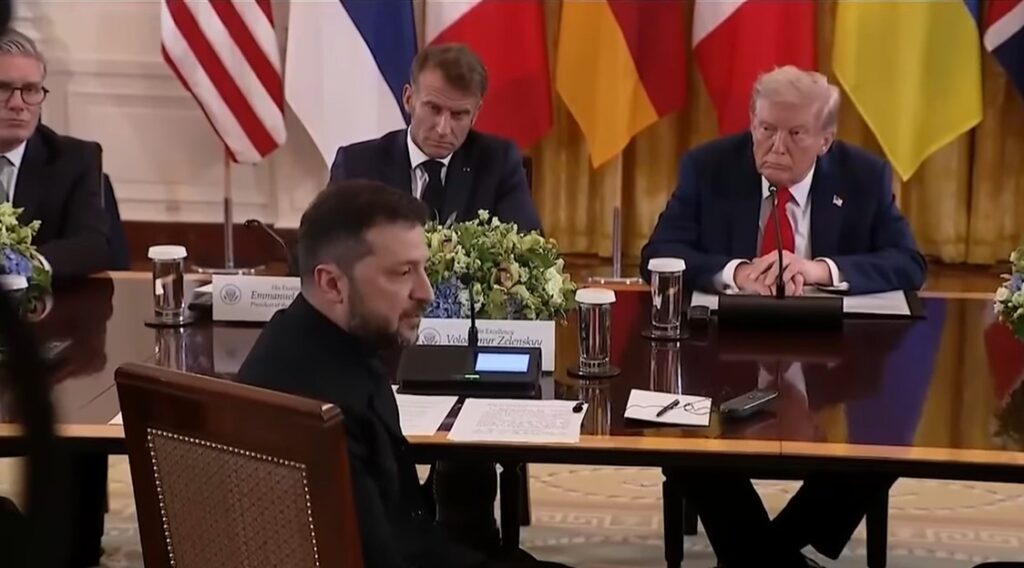
A third, critical condition for a Russian attack on a European nation is the non-intervention of the United States. With the potential return of Donald Trump to the White House, the probability of this scenario has significantly increased. In recent months, even weeks, we’ve observed Trump seemingly leaning towards accepting Russian terms regarding Ukraine. Although, in a characteristic swing, he recently labeled Putin “crazy,” and U.S. media now report he’s considering new sanctions against Russia and lifting Biden-era restrictions on military actions with U.S. weapons.
However, I suspect this is likely part of a negotiating tactic, a bargaining chip with Putin. Judging by Trump’s past actions and rhetoric, his fundamental approach appears to be that America needs good relations with Russia. To achieve this, Moscow must receive some of what it desires – perhaps not everything, but a significant portion. The crucial question then becomes: Is Trump prepared to concede not just parts of Ukraine to Putin, but potentially Eastern Europe as well?
This leads me to another pertinent article, published just yesterday in The New York Times, titled “Trump’s Vision: One World, Three Powers?” Diplomatic correspondent Edward Wong posits that Trump’s strategic vision might involve dividing the world into spheres of influence among three dominant powers: the United States, China, and Russia. (It’s a historical footnote, but the term “spheres of influence” gained prominence in 1884 at the Berlin Congress, where European powers carved up Africa.) Trump might envision a return to such an era. Putin, undoubtedly, would relish a return to a late 19th-century global order where spheres of influence were clearly demarcated.
This is, of course, speculation. Trump has never explicitly articulated such a vision. His advisors, when queried by The New York Times, denied he harbors such ideas – though it would be surprising if they admitted otherwise. Yet, some of Trump’s actions and pronouncements hint at this worldview. He clearly advocates for greater U.S. intervention in the affairs of Western Hemisphere countries, often disregarding their sovereignty (consider his remarks on Canada becoming the 51st state, Mexico, the Panama Canal, or his desire to acquire Greenland from Denmark). This aligns with a “U.S. sphere of influence.” Simultaneously, he champions reduced U.S. involvement in European affairs – a potential Russian sphere – and has shown a willingness to make concessions to Putin.
Naturally, the current U.S. administration isn’t suggesting Russia can seize Eastern Europe. Trump’s team has even voiced objections to Russia annexing Ukrainian regions it doesn’t physically occupy. But how might this stance evolve during a dramatic crisis like the one outlined by Hoffmann? We simply don’t know. If Russian nuclear missiles directly threaten Europe and the U.S., and Russian forces occupy NATO territory, could the concept of “spheres of influence” triumph in Trump’s mind over the terrifying prospect of a third world war? Why risk global conflagration if the world can be neatly divided, allowing for peaceful coexistence, trade, and communication? Trump’s “America First” slogan also implies a certain insularity: “Our house is on the edge.” American domestic affairs take precedence; the fate of Lithuanians, Poles, or Estonians becomes a distant concern for them to resolve.
Personal Fears and Uncomfortable Truths
When I read scenarios like the one in Foreign Policy, a part of me struggles to believe it. It feels far-fetched, almost fantastical. Perhaps European anxieties are exaggerating Putin’s imperialistic ambitions. Maybe his desire for conquest is confined to Ukraine, his personal obsession. Perhaps he wouldn’t dare confront NATO. I desperately want to believe that a war between Russia and European countries will not happen. To be blunt, the possibility terrifies me. Like anyone, my first thoughts are for myself and my family. As a Russian living in Europe, I understand that in such a conflict, our fate could be grim. We might face internment as citizens of an aggressor state. I recently reread Remarque’s Night in Lisbon – a powerful recommendation – which vividly describes the internment of Germans in France after Germany’s attack, irrespective of whether they were fascists or anti-fascists. All were sent to camps, and then the Nazis arrived and took the anti-fascists to their own.
For those watching or reading this from within Russia, you might feel a flicker of schadenfreude at these words – let those émigrés in Europe sweat a little. But Russians inside the country would not fare well in this scenario either. In such a conflict, Putin might deem it necessary to announce a new mobilization to demonstrate to Europe and the U.S. his absolute seriousness, his readiness to throw hundreds of thousands, perhaps millions, of soldiers into the fray. You, or your loved ones, could receive a draft notice, destined not for the conquest of Berlin or Paris, but to sit in a trench in Belarus, awaiting a Ukrainian, Polish, or Lithuanian drone.
Furthermore, it’s far from certain that events would unfold according to Putin’s plan. The scenario describes his desired outcome, but much in Ukraine has already deviated significantly from his initial script. Even if NATO’s response is initially hesitant, it’s highly conceivable that the Baltic states, Poland, Finland, and Sweden would mount a joint, fierce resistance. Think of the historical precedent of the Forest Brothers in the Baltics, or Lithuanian partisans. I cannot imagine Lithuania surrendering meekly if Russia were to attack and occupy part of its territory. There’s a strong possibility that, much like in Ukraine, instead of a lightning operation, a grueling, years-long war would erupt. For Russia, this would be a full-scale conflict: martial law, comprehensive trade embargoes, missile strikes on its cities. And given that potential participants like France and the UK possess nuclear weapons, the risk of a full-blown nuclear war would escalate dramatically.
No Winners, Only Losers
I cannot conceive of any Russian citizen benefiting from a war between Russia and NATO or other European countries. Perhaps individuals with an imperial mindset savor the abstract idea of Russia restoring its sphere of influence, of once again ruling over European nations as during the Soviet or Russian Imperial eras. But even if such an outcome were achieved – which I profoundly doubt – I am horrified by this prospect. I love my country, but I firmly believe that the interests of ordinary people are paramount, more important than the interests of the state, even my own. History teaches us that such expansions of the Russian state, its conquests, have rarely brought happiness to its own people or to the nations it subjugated. On the contrary, millions have fallen victim to these grandiose geopolitical ambitions.
I am convinced it would be no different this time if Putin continues his imperial game and, against all odds, wins. I would not want to live in such a world. It’s a world that is scary, uncomfortable, and devoid of anything resembling true happiness.
What about you? After all, as the saying goes, sometimes it feels like “Russia’s border ends nowhere.”