

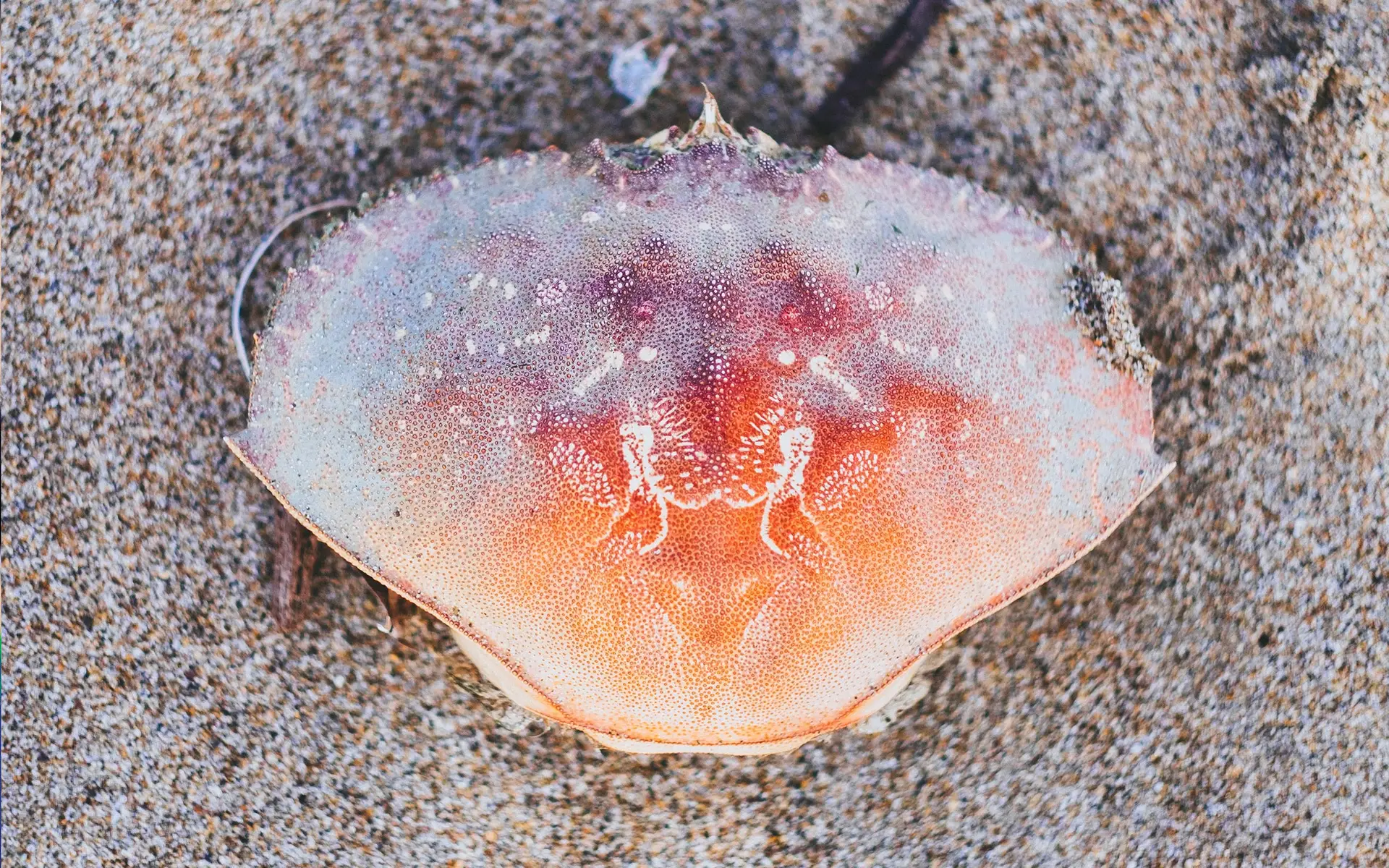
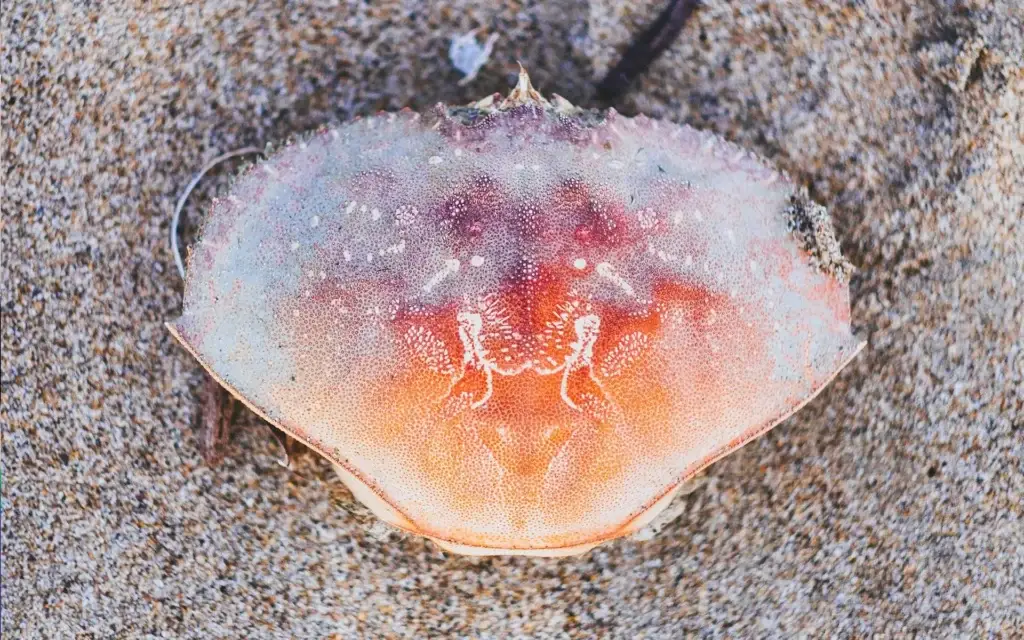
The image above showcases the intricate beauty of a crab shell, a testament to nature’s artistry. Often overlooked as mere remnants of a creature’s life, crab shells are actually fascinating structures with a story to tell.
More Than Just Protection:

While the primary function of a crab shell is to provide protection, it’s also a canvas for a stunning array of colors and patterns. The shell in the photo exhibits a mesmerizing gradient, transitioning from pale white and blue to warm orange and deep reddish-purple. These colors are not merely decorative; they can play a role in camouflage, species recognition, and even attracting mates.
A Closer Look:
Examining the shell’s texture reveals a slightly bumpy surface with tiny raised dots. These textures, along with the shell’s shape and coloration, can provide clues about the crab’s species and habitat. While a definitive identification from this image alone is challenging, the shell’s characteristics suggest it might belong to a species like the Ovalipes ocellatus, also known as the Lady Crab.
Shells as Ecosystems:
Even after a crab has molted, its shell continues to play a role in the ecosystem. It can provide shelter for smaller organisms, contribute to the formation of sand, and even serve as a source of calcium for other marine creatures.
Appreciating Nature’s Artistry:
This image serves as a reminder to appreciate the beauty and complexity of the natural world, even in seemingly mundane objects like crab shells. By taking a closer look, we can discover a hidden world of colors, textures, and patterns that tell a story of life, adaptation, and the interconnectedness of all living things.







2 Responses
Wow, the intricate textures and patterns on this crab shell are mind-blowing! It’s wild how every bump and dot isn’t just random—it’s like nature’s own fingerprint, helping identify species or even aid survival. Who knew something so small could hold so much evolutionary genius? Never underestimate the tiny wonders of the ocean!
This makes me think of the shell’s “second life” after molting—it’s not just discarded armor, but a gift to the ecosystem. From sheltering critters to nourishing the sand, even in death (or shedding), it fuels life. Nature’s recycling program is chef’s kiss perfection. ✨