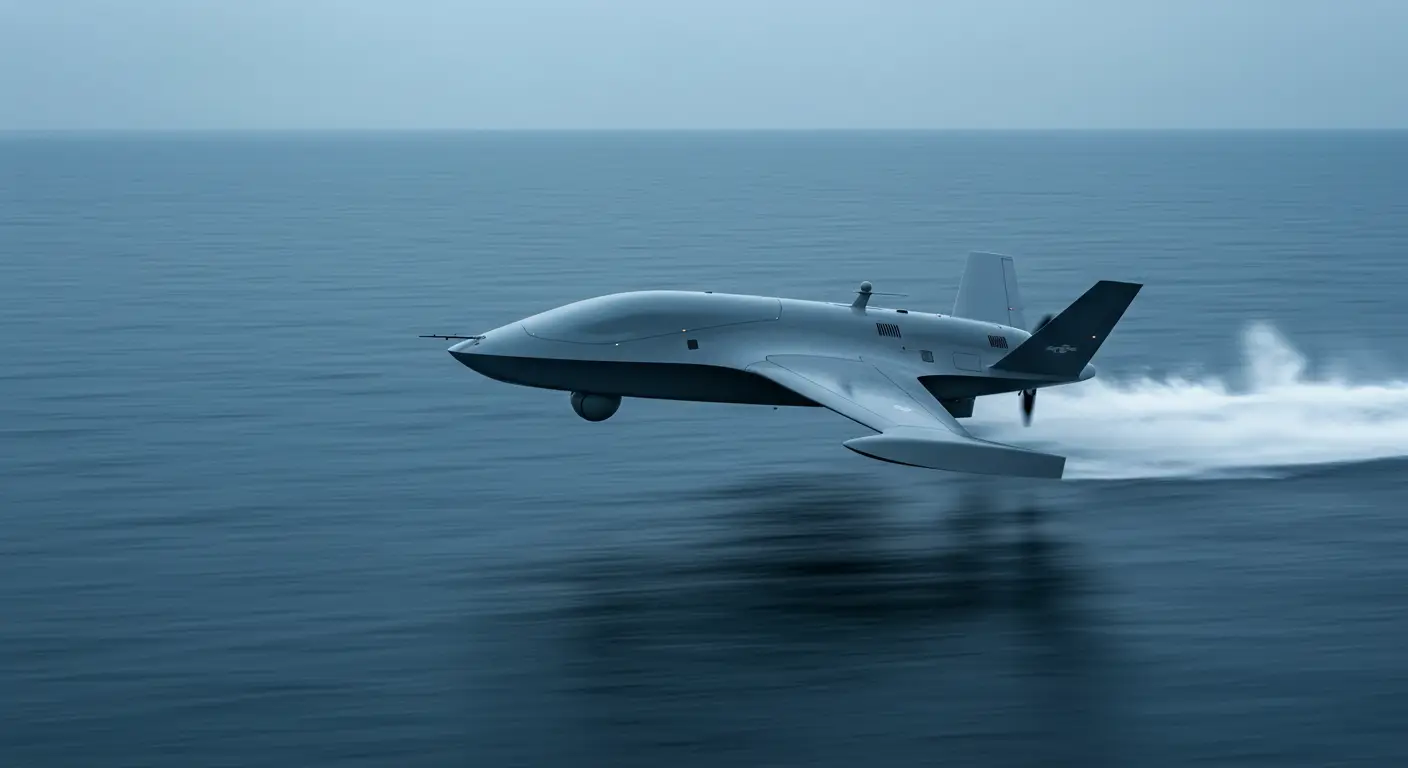
As I sit down to unpack the world of unmanned surface vessels (USVs), I’m struck by the sheer momentum this sector has gained in the global financial and technological landscape. It’s a market where innovation meets necessity, where the hum of artificial intelligence and the pulse of advanced communication systems are steering naval warfare and maritime operations into uncharted waters. My lens today is financial—how the dollars flow, where the risks lurk, and what AI and comms mean for the bottom line—but it’s impossible to ignore the technological marvels driving this ship forward. Let’s dive in.
The Financial Horizon: A Market on the Rise
I’ve been tracking the numbers, and they’re compelling. The global USV market, pegged at $2.27 billion in 2024, is forecast to climb to $3.29 billion by 2032, riding a steady 4.7% CAGR. Broader unmanned maritime systems—USVs and their underwater cousins—are eyeing $4.99 billion by 2030, with a punchier 13.78% CAGR from this year’s $2.62 billion. These aren’t just stats; they’re a signal of a seismic shift. Defense budgets are pouring in—think the U.S. Navy’s $4 billion “Ghost Fleet” ambition for 150+ unmanned vessels by 2045—and commercial applications like offshore energy and oceanography are chipping in too. I see a market where every dollar spent promises outsized returns, especially when a $250,000 USV can sink a $100 million warship, as Ukraine’s Magura V5 has proven.

But the financial story isn’t all smooth sailing. Upfront costs are steep. Developing a combat-ready USV like the Magura V5 might cost $250,000 per unit, but the R&D behind it—design, testing, AI integration—runs into the millions. Take the U.S. Navy’s Sea Hunter: its prototype swallowed $20 million, and that’s before scaling production. Larger platforms like the Overlord? I’m estimating $10-$50 million each, factoring in advanced hulls and payloads. AI and comms pile on more: $1-$5 million for navigation algorithms and swarm logic, $50,000-$500,000 for secure satellite links. For big players like L3Harris or China’s CSSC, setting up production lines could mean $100 million upfront. It’s a high-stakes bet, but the payoff—20-30% margins on scalable models—keeps me optimistic.
AI: The Brain Behind the Brawn
I can’t overstate how AI is rewriting the financial equation here. It’s the brain of these vessels, and it’s a game-changer. When I look at Ukraine’s Magura V5, I see a lean, mean machine—5.5 meters, 800-km range, 320-kg payload—guided by basic AI for navigation and targeting. It’s not fancy, but it’s effective, keeping R&D costs low at maybe $1 million total. Contrast that with the U.S.’s Sea Hunter, where DARPA’s ACTUV AI drives autonomous anti-submarine missions over 2,000 nautical miles. That’s a $5 million AI investment, easy, but it slashes operational costs—30% less human oversight, 10-20% fuel savings via optimized routes. I’m impressed by how AI scales impact without scaling costs linearly. China’s 50+ drone swarms? That’s AI coordinating dozens of $200,000 units to outmatch a $1 billion fleet.
Financially, AI’s a double-edged sword. It boosts revenue—missile upgrades like the Magura’s R-73 add 20-30% to unit prices, and predictive maintenance ups uptime by 5-10%—but it’s not cheap. Developing swarm logic or target recognition takes years and millions, and a single glitch (say, misidentifying a friendly ship) could cost $100,000s in damages or lost contracts. Still, I see AI as a profit multiplier. Companies that nail it—like General Dynamics with its Knifefish algorithms—can charge premiums and lock in long-term defense deals. It’s a risk I’d take if I were running their books.
Communication Systems: The Lifeline of USVs
If AI is the brain, comms are the nervous system, and I’ve got my eye on how they shape the financials. Ukraine’s use of Starlink—$2,500 per terminal—shows how affordable, reliable comms can stretch a USV’s reach. The Magura V5’s 800-km range wouldn’t mean much without real-time video feeds and encrypted controls, letting operators strike Russian ships 400 miles away. For bigger players, it’s pricier: satellite systems for the U.S.’s Overlord or China’s JARI-USV run $500,000 per setup, ensuring beyond-line-of-sight ops. I’m talking mesh radio, 5G, and redundant channels to dodge jamming—essential when Russia’s throwing electronic warfare at you in the Black Sea.
The financial upside? Huge. Secure comms enable ISR missions that fetch $1-$2 million contracts—NATO’s REPMUS exercises prove it. But the downside stings: a jammed USV is a $250,000 paperweight, and scaling comms for a fleet adds millions. I see companies like Kongsberg, with their Sounder USV’s robust links, banking on this reliability to justify higher prices. It’s a cost I’d budget for—without it, you’re dead in the water, literally.
Market Players: Who’s Cashing In?
I’ve been digging into the public companies riding this wave. L3Harris (NYSE: LHX) is a standout—$20.8 billion in 2024 revenue, and their T38 Devil Ray USVs are U.S. Navy staples. They’re likely behind the “unmanned coastal defense vessels” in Ukraine’s 2022 U.S. aid package, though it’s bundled into DoD contracts. Textron (NYSE: TXT) is in the same boat—$13.7 billion revenue, CUSV production—and I’d bet they’re part of that aid too. Teledyne (NYSE: TDY) caught my eye with their $5.6 billion haul and an Otter USV delivered to Ukraine in 2023—not a combat drone, but its sensors could trickle into Magura’s ecosystem. Kongsberg (Oslo: KOG) and General Dynamics (NYSE: GD) round out the list, with $4 billion and $47.8 billion respectively, offering tech that might indirectly bolster Ukraine’s efforts.
What strikes me is the lack of direct investment in Ukraine’s USV makers like SpetsTechnoExport. These firms are state-run, fueled by Kyiv’s budget and United24’s millions, not Wall Street cash. I see opportunity missed—Ukraine’s $250,000 drones sinking $100 million ships scream ROI—but geopolitical risk keeps public companies at arm’s length. Instead, they’re funneling tech through aid, not equity.
Strengths and Weaknesses: The Financial Balance Sheet
I love the strengths here. USVs ditch crew costs—$500,000/year for a small warship—cutting expenses by 50-70%. AI and comms scale that advantage, turning a $1 million investment into a fleet-killer. Revenue’s diverse—military contracts, commercial gigs—and demand’s soaring with tensions in the Black Sea and South China Sea. But I can’t ignore the weaknesses. R&D’s a cash sink—$50-$200 million annually for big players—and supply chain hiccups (think sanctions or chip shortages) could spike costs 15-25%. Profit’s uncertain too; a delayed U.S. Navy contract in 2023 left firms like L3Harris waiting. Tech obsolescence—5G today, quantum comms tomorrow—means constant reinvestment, maybe $1-$2 million yearly just to keep up.
The Road Ahead: My Take
Looking out to 2030, I see a market hitting $5-$10 billion annually for leaders like the U.S. and China. Short-term, it’s a grind—high costs, tight margins—but by 2028, scale kicks in, and 15-20% profits emerge as production drops 20-30%. AI and comms will drive it—swarms of 100+ drones, hybrid surface-subsurface designs—and I’d wager Ukraine could grab a slice if they export post-war. Risks? Sure—regulatory lag could cost $100,000s in fines, and a hacked comms system could tank a firm’s rep. But the upside’s too big to ignore.
As I wrap this up, I’m convinced USVs are a financial and tech frontier worth watching. AI’s the profit engine, comms the lifeline, and the market’s a high-wire act of risk and reward. If I were investing, I’d back the innovators—L3Harris, Ukraine’s scrappy startups—because this isn’t just about ships. It’s about rewriting naval power, one dollar and one drone at a time.
What’s driving the financial growth of the USV market, and how big could it get?
I’ve been digging into this, and it’s clear the USV market’s on fire because of two big drivers: defense budgets and commercial needs. Militaries—like the U.S. with its $4 billion “Ghost Fleet” plan—are pouring cash into these unmanned vessels to rethink naval warfare, while industries like offshore energy and ocean research are snapping them up for cost-effective surveys. The numbers back it up: the market hit $2.27 billion in 2024 and could climb to $3.29 billion by 2032, with a steady 4.7% growth rate. If you zoom out to all unmanned maritime systems, we’re talking $4.99 billion by 2030. I’d bet that by 2033, top players like the U.S. and China could be raking in $5-$10 billion a year if they keep scaling and innovating. It’s a goldmine if you can stomach the upfront costs.
How do AI and communication systems affect the cost and profitability of USVs?
This is where it gets exciting—and tricky. AI’s the brain of these vessels, and it’s a financial game-changer. For something like Ukraine’s Magura V5, basic AI for navigation and targeting might cost $1 million to develop, but it keeps the unit price low at $250,000 while letting it punch way above its weight—sinking $100 million ships. On the high end, the U.S.’s Sea Hunter AI costs maybe $5 million but cuts operational costs by 30% with less human oversight. Communication systems are the lifeline—Starlink’s $2,500 terminals make Ukraine’s drones deadly over 800 km, while pricier satellite setups for bigger USVs run $500,000. These techs boost profits—20-30% price premiums for AI features, $1-$2 million ISR contracts with solid comms—but they’re not cheap to build, and a glitch or jam could cost you $100,000s. I see them as must-haves; they’re where the margins live.
Why aren’t more public companies investing directly in Ukraine’s USV tech, given its success?
I’ve been scratching my head over this one. Ukraine’s Magura V5 is a financial dream—$250,000 to build, millions in damage to Russian fleets—but I don’t see big public firms like L3Harris or Teledyne jumping in with direct investments. The issue’s risk. Ukraine’s USV scene is state-run—SpetsTechnoExport and military intel call the shots, funded by Kyiv and crowdfunding, not corporate cash. Warzone instability and Russia’s sanctions threat scare off Wall Street. Instead, companies like L3Harris (with $20.8 billion in revenue) or Textron ($13.7 billion) are playing it safe, likely supplying tech through U.S. aid packages—like the 2022 “coastal defense vessels”—rather than betting on Ukrainian startups. It’s a missed opportunity, in my view; post-war, that tech could be an export cash cow, but for now, they’re keeping their distance.