

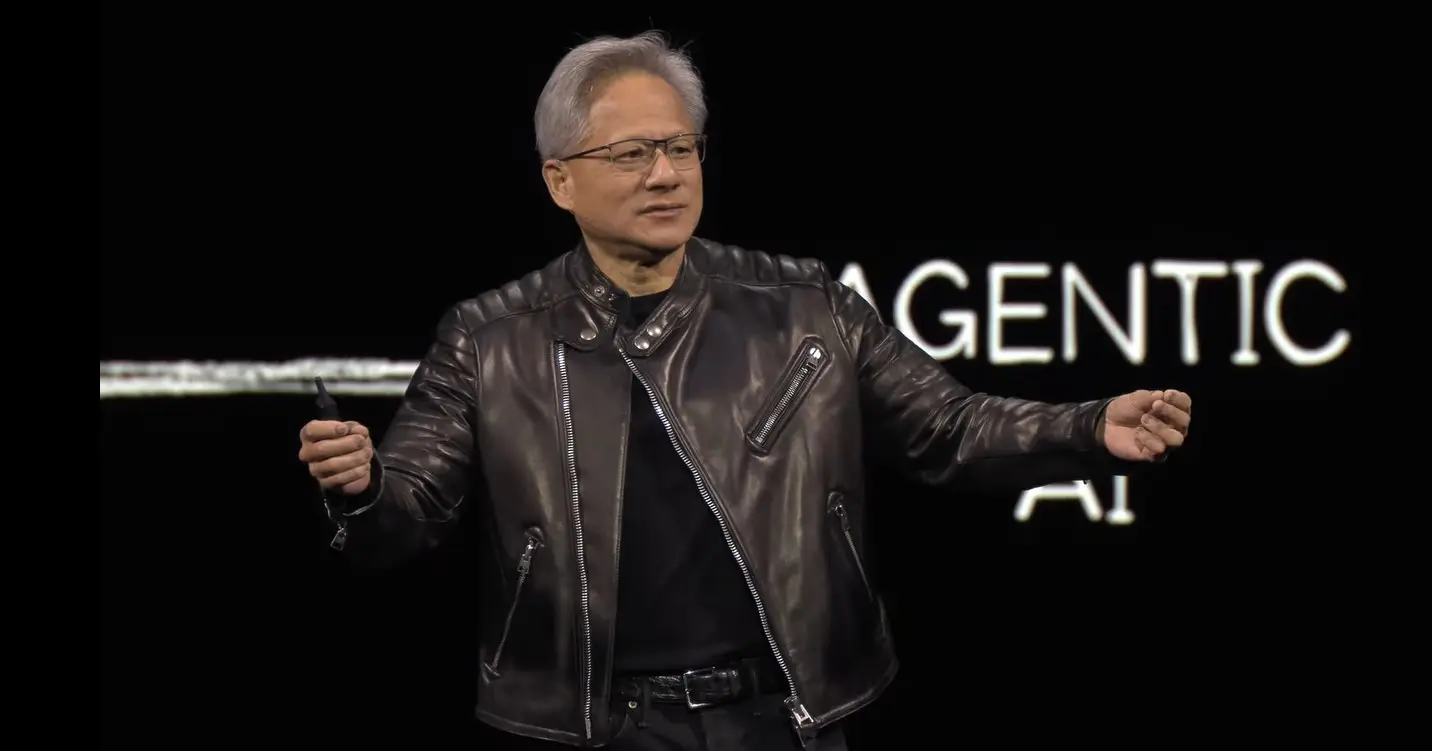
The NVIDIA GPU Technology Conference (GTC), held virtually and at the San Jose McEnery Convention Center from March 17–21, 2025, served as a pivotal moment for the technology industry. This event, a convergence of developers, researchers, and industry leaders, showcased the latest advancements in artificial intelligence, accelerated computing, and data science.
NVIDIA’s keynote, delivered by CEO Jensen Huang, unveiled a paradigm shift in AI, moving beyond generative models to the era of agentic intelligence. This article provides a technical analysis of NVIDIA’s strategic direction, examining the implications of its “token factory” concept, the escalating demand for computational resources, and the company’s expanding ecosystem. By scrutinizing the technological underpinnings and market strategies presented at GTC, this analysis aims to elucidate the evolving landscape of artificial intelligence and NVIDIA’s pivotal role within it. The insights gained from the virtual and physical experiences of GTC 2025 offer a unique perspective on the trajectory of AI development.

Abstract: NVIDIA’s recent GTC presentation articulated a profound shift in the computational paradigm, moving beyond generative AI towards agentic intelligence. This article provides a technical analysis of NVIDIA’s strategic direction, examining the implications of its “token factory” concept, the escalating demand for computational resources, and the company’s expanding ecosystem. By scrutinizing the technological underpinnings and market strategies, this analysis aims to elucidate the evolving landscape of artificial intelligence and NVIDIA’s pivotal role within it.
Introduction: The evolution of artificial intelligence, as presented by NVIDIA, signifies a transition from passive content generation to active problem-solving. This progression, characterized by the emergence of agentic AI, necessitates a reevaluation of computational architectures and software frameworks. NVIDIA’s strategic narrative, centered on the “token factory” metaphor, underscores a fundamental shift from data retrieval to generative computation, wherein AI systems synthesize knowledge and execute tasks with increasing autonomy.
The Paradigm Shift: From Generative to Agentic AI: The transition from generative AI, primarily focused on modality translation (e.g., text-to-image), to agentic AI, which incorporates reasoning and planning, represents a significant advancement. Agentic AI is defined by its capacity to:
- Perceive and Understand Context: AI systems are increasingly capable of interpreting complex environments and extracting relevant information.
- Reason and Plan: The incorporation of algorithms such as Chain of Thought and reinforcement learning enables AI to break down problems, explore solution pathways, and execute multi-step plans.
- Utilize Tools: Agentic AI can interact with diverse software and hardware tools, extending its operational scope beyond predefined parameters.
This progression necessitates a substantial increase in computational demand. The generation of reasoning sequences, involving multiple token iterations, results in an exponential surge in processing requirements. As Huang articulated, a 100x increase in computational demand is anticipated, driven by both the complexity of AI models and the need for real-time responsiveness.
The “Token Factory” and the Computational Infrastructure: NVIDIA’s concept of “AI factories” highlights the transition from retrieval-based computing to generative computing. This shift implies:
- Tokenization of Information: Data is transformed into tokens, the fundamental units of AI processing, enabling the synthesis of diverse outputs, from text and images to scientific simulations.
- Infrastructure Transformation: The escalating demand for computational resources necessitates a reimagining of data center architecture, with a focus on accelerated computing and specialized AI hardware.
- Software Ecosystem Expansion: The CUDA ecosystem, augmented by specialized libraries (e.g., cuLitho, cuOpt), provides the software foundation for accelerated computing across diverse domains.
The proliferation of CUDA-accelerated libraries signifies NVIDIA’s commitment to democratizing AI development. By providing optimized frameworks for scientific computing, data analytics, and industrial applications, NVIDIA is fostering a vibrant ecosystem of AI innovation.
Expanding Ecosystem and Market Diversification: NVIDIA’s strategic diversification is evident in its expansion beyond cloud-based AI. Partnerships with telecommunications companies (e.g., T-Mobile, Cisco) and automotive manufacturers (e.g., GM) illustrate the company’s commitment to deploying AI in edge computing and autonomous vehicles. Key observations include:
- Edge Computing Deployment: The development of full-stack solutions for radio networks underscores NVIDIA’s focus on enabling AI-powered edge computing applications.
- Autonomous Vehicle Integration: The collaboration with GM to build AI infrastructure for autonomous vehicles highlights NVIDIA’s continued leadership in this domain.
- Safety and Reliability: The emphasis on safety, as exemplified by the Halos initiative, reflects the growing importance of robust and transparent AI systems, particularly in safety-critical applications.
Technical Considerations: The development of agentic AI necessitates advancements in several technical areas:
- Reinforcement Learning: The utilization of reinforcement learning with verifiable results enables AI to learn from solved problems and generate synthetic training data.
- Model Distillation: Techniques such as model distillation, exemplified by the Cosmos project, facilitate the deployment of complex AI models in resource-constrained environments.
- Computational Efficiency: The development of efficient algorithms and hardware architectures is crucial for addressing the escalating demand for computational resources.
Conclusions: NVIDIA’s strategic trajectory reflects a profound understanding of the evolving landscape of artificial intelligence. By embracing agentic AI, fostering a robust software ecosystem, and diversifying its market presence, NVIDIA is positioning itself as a pivotal force in the AI revolution. The company’s emphasis on infrastructure development, safety, and democratization of AI tools underscores its commitment to shaping the future of computing. From the author’s point of view, the key takeaways are:
- NVIDIA is no longer just a hardware company, but a full stack AI company.
- The company is driving the next wave of AI, agentic AI, which is much more complex and computationally intensive.
- The growth of the ecosystem is key to the company’s success.
- The company’s investment in safety is a key differentiator.
- The concept of the “token factory” is a powerful metaphor for the generative AI revolution.
The ongoing evolution of AI, driven by advancements in agentic intelligence and computational infrastructure, will continue to reshape industries and redefine the boundaries of technological possibility.









4 Responses
You mentioned the importance of safety in autonomous vehicles. While NVIDIA’s Halos initiative is commendable, how can we ensure that AI systems, particularly agentic AI, remain transparent and accountable as they become more complex?
That’s a critical point. Ensuring transparency and accountability is paramount, especially as AI systems gain autonomy. Key approaches include:
Explainable AI (XAI): Developing techniques to make AI decision-making processes more transparent and understandable.
Formal Verification: Employing rigorous mathematical methods to verify the correctness and safety of AI algorithms.
Auditing and Monitoring: Implementing robust auditing and monitoring systems to track AI behavior and identify potential biases or errors.
Ethical Guidelines and Regulations: Establishing clear ethical guidelines and regulatory frameworks to govern the development and deployment of AI systems.
Diversity in Development: Promoting diverse teams in the development of AI systems to reduce bias.
Red Teaming: Actively trying to break the AI systems in a controlled environment to find weaknesses.
Ultimately, a multi-faceted approach involving technological innovation, ethical considerations, and regulatory oversight is essential to build trust in AI.