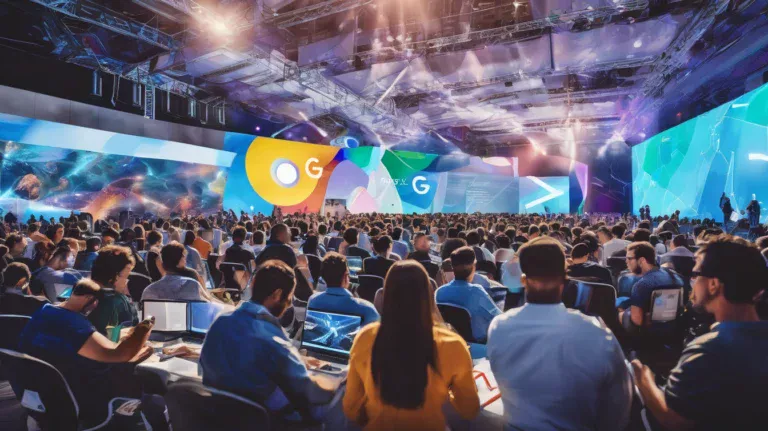
On April 9-11, 2025, the Mandalay Bay Convention Center in Las Vegas hosted Google Cloud Next ’25, a flagship conference that unveiled Google’s vision for the future of cloud computing and artificial intelligence. With over 500 sessions, keynotes from Google and Alphabet CEO Sundar Pichai, and a palpable buzz across tech communities, the event positioned Google as a formidable contender in the AI race. From a groundbreaking Rubik’s Cube simulation to a new Tensor Processing Unit and agent-driven platforms, the announcements were ambitious—but do they hold up under scrutiny? Let’s reason through the highlights, evaluate their significance, and explore what they mean for enterprises, developers, and the broader AI landscape.
The Rubik’s Cube as a Reasoning Benchmark
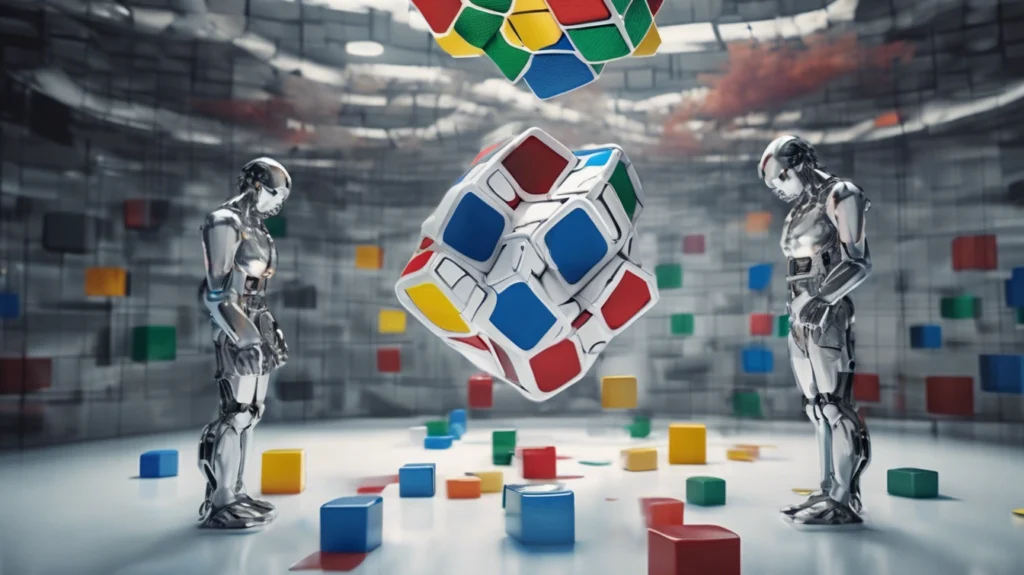
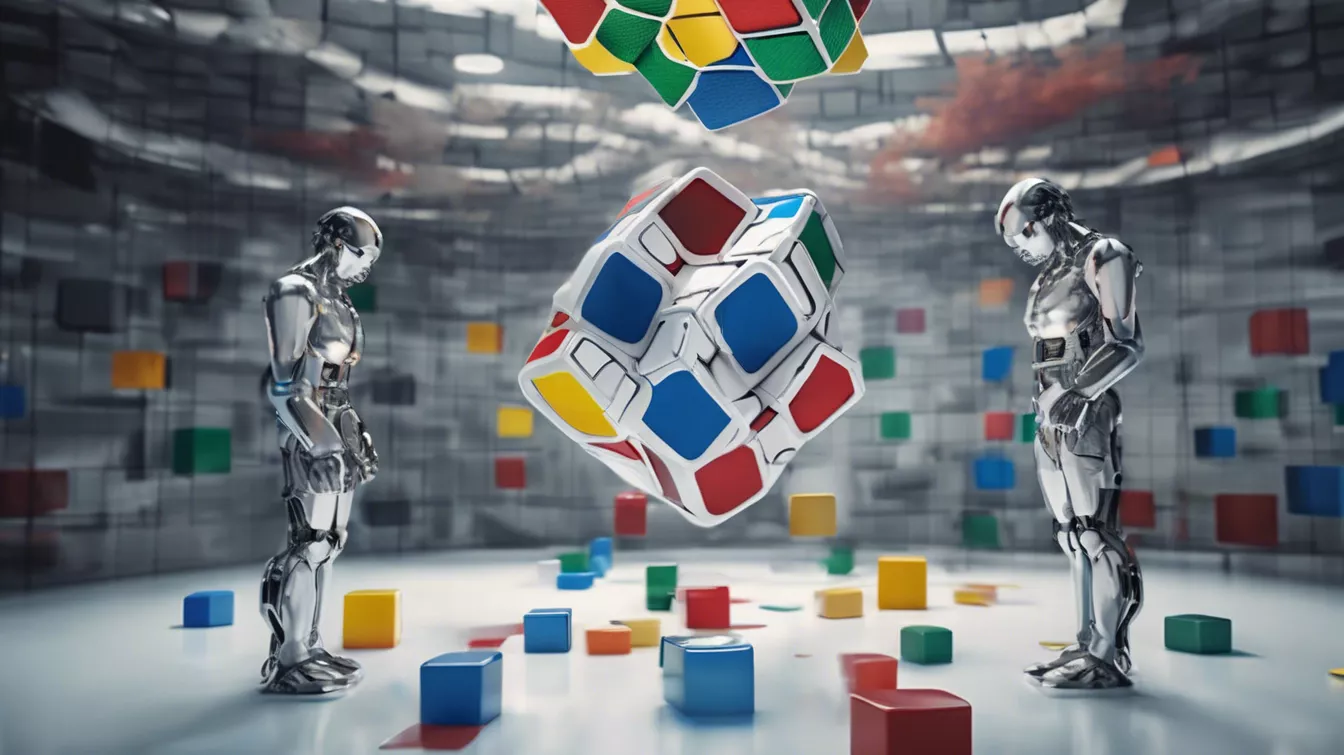
Consider a Rubik’s Cube: a deceptively simple puzzle with 43 quintillion possible configurations, yet only one solution. At Next ’25, developer Matt Berman’s Rubik’s Cube simulation, powered by Google’s Gemini 2.5 Pro model, took center stage in the keynote. This wasn’t just a nostalgic nod to a childhood toy—it was a deliberate showcase of AI reasoning. The simulation, complete with adjustable dimensions, scrambling mechanics, and keyboard controls, required Gemini to generate complex, interactive code. What’s striking is the claim that it did so in a single attempt, without iteration or examples—a “zero-shot” feat.
Why does this matter? Generating functional code for a dynamic simulation demands not just syntax knowledge but logical reasoning: understanding the cube’s mechanics, mapping user inputs to outcomes, and ensuring the system runs smoothly. If Gemini 2.5 Pro achieved this in one shot, as Berman asserts, it suggests a leap in AI’s ability to generalize and solve novel problems. However, we must question the context: Was the prompt highly specific? Did the demo gloss over edge cases? Without seeing the exact input, we can’t fully verify the zero-shot claim, but its inclusion in the keynote signals Google’s confidence in Gemini’s reasoning prowess.
This example sets the stage for evaluating Next ’25’s broader announcements. If Google can tackle a Rubik’s Cube with such finesse, what else can its AI infrastructure achieve? Let’s examine the key reveals through a reasoned lens.
Ironwood TPU: Powering the AI Future?
Google introduced Ironwood, its seventh-generation Tensor Processing Unit (TPU), claiming a staggering 3,600x performance improvement over its first TPU and 29x better energy efficiency. These numbers demand scrutiny. A 3,600x leap sounds revolutionary, but it’s relative to a chip from over a decade ago, not a current competitor like NVIDIA’s H100 or AWS’s Inferentia. Without direct benchmarks, we’re left to infer Ironwood’s edge. The focus on energy efficiency, however, is a stronger selling point. AI’s energy demands are a growing concern—data centers already strain global grids. If Ironwood delivers comparable performance with a fraction of the power, it could lower costs and environmental impact, giving Google a practical advantage.
Reasoning further, Ironwood’s purpose is clear: to fuel generative AI at scale. As enterprises adopt AI for tasks like natural language processing and media generation, computational bottlenecks loom large. A chip optimized for inference (running trained models) rather than training could streamline real-time applications, from chatbots to video synthesis. Yet, Google’s silence on availability—“coming later this year”—raises questions. Is Ironwood ready to deploy, or is this a strategic tease to keep investors and customers intrigued? For now, its potential hinges on execution, but the emphasis on efficiency aligns with industry needs, making it a plausible game-changer.
Gemini 2.5: Reasoning Redefined?
At the heart of Next ’25 was Gemini 2.5 Pro, described as a “thinking model” that reasons through problems before responding. Google claims it’s the world’s best, citing top scores on benchmarks like “Humanity’s Last Exam,” a test designed to probe the limits of knowledge and logic. The Rubik’s Cube demo was offered as proof, but Gemini’s broader capabilities were also touted: coding, reasoning, and multi-modal tasks. A lighter version, Gemini 2.5 Flash, was announced for low-latency, cost-efficient use, balancing performance with budget.
Let’s reason through the claims. Benchmarks are useful but imperfect—high scores don’t always translate to real-world reliability. The Rubik’s Cube success suggests Gemini excels at structured tasks, but how does it fare with ambiguous or open-ended problems? The zero-shot coding feat is impressive, yet we must consider whether it’s an outlier. If Gemini consistently produces robust code without iteration, it could revolutionize development workflows, reducing time and expertise barriers. However, the keynote’s lack of emphasis on this detail, as noted by Berman, suggests Google may be prioritizing breadth over depth in its messaging.
Gemini 2.5 Flash, meanwhile, targets accessibility. By offering a cheaper, faster model, Google aims to democratize AI for smaller businesses and developers. But without pricing or performance specifics, we’re left to speculate. Will Flash sacrifice too much accuracy for speed? The promise of “thinking built-in” implies retained reasoning, but real-world testing will be the true judge. For now, Gemini’s dual offerings—Pro for power, Flash for efficiency—reflect a strategic bid to capture both enterprise and grassroots markets.
Agents and Interoperability: The Future of AI Workflows
Perhaps the most forward-looking announcement was Google’s Agent Development Kit and agent-to-agent interoperability framework, embodied in Google Agentspace. This open-source platform simplifies building multi-agent systems that can reason, use tools, and collaborate across platforms. A demo showed Agentspace integrating Box and Google Cloud’s Big Query to generate a claim report, with agents querying disparate data sources seamlessly. The agent-to-agent protocol, supported by standards like the Model Context Protocol (MCP), enables agents from different frameworks—Google, Langraph, Crew AI—to communicate.
Reasoning through this, the implications are profound. Enterprises often grapple with siloed data and incompatible systems. An interoperable agent ecosystem could unify workflows, automating complex tasks like financial reporting or supply chain management. The open-source approach is a smart move: it invites developers to contribute, fostering adoption and innovation. Support for MCP, backed by Google, Microsoft, OpenAI, and Anthropic, suggests an industry shift toward standardization, reducing fragmentation.
But challenges remain. Interoperability sounds ideal, but integrating diverse models risks compatibility issues or performance degradation. The demo’s success with Box and Big Query is promising, yet it’s a controlled use case. How will Agentspace handle messier, real-world scenarios with inconsistent data? Moreover, while open-source, the framework’s reliance on Gemini models raises questions about vendor lock-in. Can developers truly use any model, or is Gemini the default? These uncertainties temper the excitement, but the vision of an agent-driven future—where AI systems collaborate like human teams—is compelling and worth watching.
Generative Media: Creativity Meets Enterprise
Google also flexed its multi-modal muscles with new generative media models: Imagen 3 for text-to-image, Chirp 3 for voice, Lyria for text-to-music, and Veo 2 for video. Veo 2 stood out, generating 4K videos from a single image with advanced editing tools like inpainting, camera presets, and first/last shot control. A live demo showcased a drone shot of a city skyline, followed by inpainting to remove a stagehand from a concert video—all seamless and watermarked with SynthID for AI traceability. These models, available on Vertex AI, target enterprise-grade applications with security and compliance.
Let’s evaluate this logically. Multi-modal AI is a crowded space—OpenAI’s Sora, ElevenLabs’ voice synthesis, and MidJourney’s image generation are strong competitors. Google’s edge lies in integration: offering all modalities under one platform simplifies adoption for businesses. Veo 2’s editing capabilities, like directing camera angles without complex prompts, suggest a focus on usability, crucial for non-expert users. Lyria’s music generation, a hyperscaler first, opens niche creative markets, while Chirp 3’s 10-second voice cloning competes directly with ElevenLabs.
However, we must question accessibility and ethics. Vertex AI’s enterprise focus implies high costs, potentially limiting access for smaller creators. SynthID watermarking addresses AI misuse, but can it keep pace with deepfake proliferation? The demo’s polish is impressive, but real-world performance—say, generating consistent videos across diverse prompts—remains untested. Still, Google’s comprehensive approach positions it as a one-stop shop for creative AI, appealing to industries from marketing to entertainment.
Box Partnership: A Practical Proof Point
A partnership with Box highlighted Agentspace’s practical value. Box AI, integrated with Gemini 2.5 Pro, enables enterprises to extract insights from documents stored on Box, handling the full Retrieval-Augmented Generation (RAG) pipeline. With 115,000 organizations trusting Box’s security and compliance, this collaboration grounds Google’s AI ambitions in real-world utility.
Reasoning through this, the partnership is strategic. Box’s established user base amplifies Google’s reach, while Agentspace’s ability to query Box and Big Query together demonstrates cross-platform synergy. For enterprises, this means faster, more accurate workflows—think generating reports without manual data wrangling. Yet, we should ask: Is the integration as seamless as claimed? Scaling RAG across millions of documents could strain performance, and Box’s reliance on Gemini may limit flexibility. Nonetheless, this use case makes Google’s agent vision tangible, bridging hype and reality.
Weighing the Big Picture
Stepping back, what does Next ’25 reveal about Google’s trajectory? The event paints a picture of a company firing on all cylinders, as one commentator put it, leveraging hardware (Ironwood), models (Gemini), platforms (Agentspace), and partnerships (Box) to dominate AI and cloud computing. The Rubik’s Cube demo encapsulates this ambition: a complex problem solved elegantly, hinting at broader potential. Yet, reasoning demands skepticism. Grand claims—like Ironwood’s performance or Gemini’s benchmark supremacy—require real-world validation. Timelines are vague, and competitive pressures from AWS, Microsoft, and OpenAI loom large.
Consider the counterarguments. Google’s enterprise market share lags behind AWS and Azure—can Next ’25’s innovations close the gap? Open-source moves are promising, but adoption depends on developer trust and ease of use. Energy efficiency is critical, but will Ironwood’s gains outweigh infrastructure costs? These questions don’t diminish Google’s achievements but ground them in reality.
Conclusion: A Logical Leap Forward
Google Cloud Next ’25 was a bold statement of intent, blending technical prowess with strategic vision. The Rubik’s Cube simulation proved Gemini’s reasoning capabilities, Ironwood promised scalable AI infrastructure, and Agentspace envisioned a collaborative future. Generative media models and partnerships like Box added practical value, appealing to enterprises and creators alike. Through a reasoning lens, the announcements are impressive but not infallible—success hinges on execution, transparency, and market response.
For enterprises, Google offers a compelling suite of tools to streamline workflows and innovate. For developers, open-source frameworks and accessible models lower barriers to entry. For the industry, standards like MCP signal a maturing ecosystem. As we await Ironwood’s rollout, Gemini 2.5 Flash’s release, and Agentspace’s adoption, one thing is clear: Google is reasoning its way toward AI leadership, one calculated step at a time.